
Bad days do not announce themselves. The failed exam, the rough week at work, the lonely stretch in a new city, the diagnosis, the heartbreak — life in Dubai, for all its glitter, includes the full human catalogue of difficult days. And on those days, flowers do something remarkable: they do not fix anything, yet they change everything. A bright bouquet arriving on a dark day is proof that someone noticed, someone cares, and beauty persists regardless. Cheer-up flowers are among the most meaningful gifts you can send — not celebratory, not romantic, not obligatory, just kind. But choosing them well requires sensitivity: the wrong flowers can feel tone-deaf, while the right ones feel like a hug in a vase. This guide covers how to choose cheer-up flowers in Dubai that genuinely lift someone’s spirits — the colours, the varieties, the messages, and the timing that turn a bouquet into a balm.
Why Flowers Work on Bad Days
The effect of flowers on mood is not just sentiment — it is studied science. Research in environmental psychology has repeatedly found that flowers trigger genuine positive emotions: participants receiving flowers report increased happiness, reduced anxiety, and elevated feelings of life satisfaction, with effects measurable days after the delivery. The mechanisms are intuitive. Flowers command attention — their colour, scent, and vitality interrupt rumination, pulling a stressed mind into the present moment. They signal care — someone took trouble, spent money, and thought specifically of you, which counters the isolation that bad days bring. And they bring nature indoors — even in a high-rise apartment in the Marina, a vase of sunflowers is a small piece of the living world, and humans respond to that at a level deeper than aesthetics. For the sender, there is a quiet power in the gesture too: when you do not know what to say — and on truly bad days, words often fail — flowers speak for you. They say “I’m here” without requiring the recipient to perform gratitude or the sender to find perfect words. In Dubai’s expatriate community, where many people weather hard times far from family, that wordless solidarity matters enormously.
The Cheer-Up Colour Palette
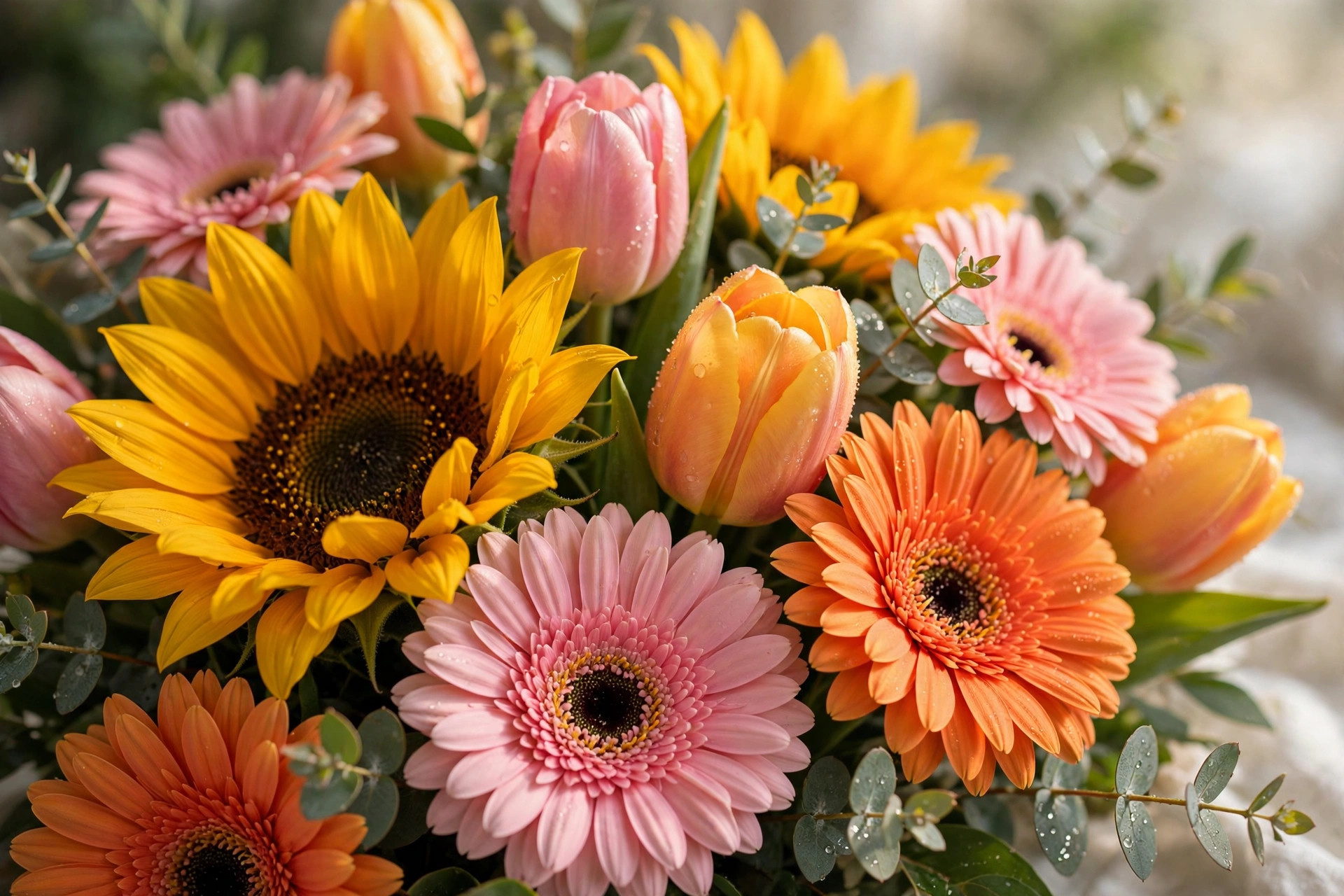
Colour is the primary active ingredient in cheer-up flowers. The goal is energy, warmth, and light — colours that physiologically lift rather than soothe into sadness. Yellow is the undisputed champion: sunflowers, yellow roses, yellow gerberas radiate optimism and are culturally associated with friendship and joy across most traditions. Bright, warm mixes — oranges, corals, hot pinks, cheerful reds — create a sense of celebration and vitality that counteracts gloom. Even the act of choosing vibrant colour communicates intent: “I want you to feel brighter.” What to avoid: predominantly white or very pale arrangements, which can read as funereal or somber on a bad day — the opposite of the message. Deep, dark palettes (burgundy, near-black) feel heavy when someone is already low. Pastels are gentle and can work for quiet, exhausted sadness (the burnout, the grief-adjacent days), but for the classic “rough day” bouquet, go bold and bright. Think of it as prescribing sunshine: the more vivid the arrangement, the stronger the dose. A riot of colour on the kitchen table is hard to stay sad in front of — and that is precisely the point.
Flowers with built-in joy
Certain flowers seem designed for cheering up. Sunflowers are the heavyweight champions — enormous, unabashedly happy, impossible to ignore, and they last well. Gerbera daisies bring playful, confetti-like colour in every shade and suit informal, heartfelt gestures. Tulips (in season) feel fresh and hopeful, their upward-facing blooms literally oriented toward optimism. Bright mixed bouquets — the florist’s cheerful jumble of seasonal colour — often outperform single-variety designs for cheer-up purposes because abundance itself is uplifting. Daisies, alstroemeria, and spray roses in vivid tones all contribute to the effect. Scented flowers add another dimension: freesias, stocks, and fragrant roses engage the senses fully, and scent is powerfully linked to emotional memory. For a longer-lasting lift, consider a bright orchid plant or a cheerful potted flowering plant — the gift keeps giving for weeks, a daily reminder that the bad day passed and someone cared.
Matching Flowers to the Situation
“Cheer up” covers a wide emotional range, and sensitivity means calibrating to the specific situation. For everyday bad days — work stress, minor setbacks, homesickness — bright, fun, informal bouquets are perfect; the tone is “this too shall pass, and here’s some colour meanwhile.” For illness and recovery, choose cheerful but practical: compact arrangements, low fragrance (hospital wards often restrict strong scents — check before sending lilies), and easy-care designs. Bright get-well flowers sent to the home for convalescence can be more generous. For heartbreak, tread gently: warm, comforting flowers rather than wildly exuberant ones — the message is solidarity, not “snap out of it.” Soft brights, comforting colours, and a heartfelt card acknowledging the pain land better than forced cheer. For grief-adjacent situations — a bad diagnosis in the family, a beloved pet’s passing — flowers should be gentle and respectful rather than party-bright; this edges toward sympathy territory, where restraint honours the emotion. For loneliness and expat blues — endemic in Dubai’s transient community — the most cheering gift is often flowers plus presence: the bouquet delivered by hand, with time spent together. The flowers open the door; your company does the real work.
What to Write When Words Are Hard
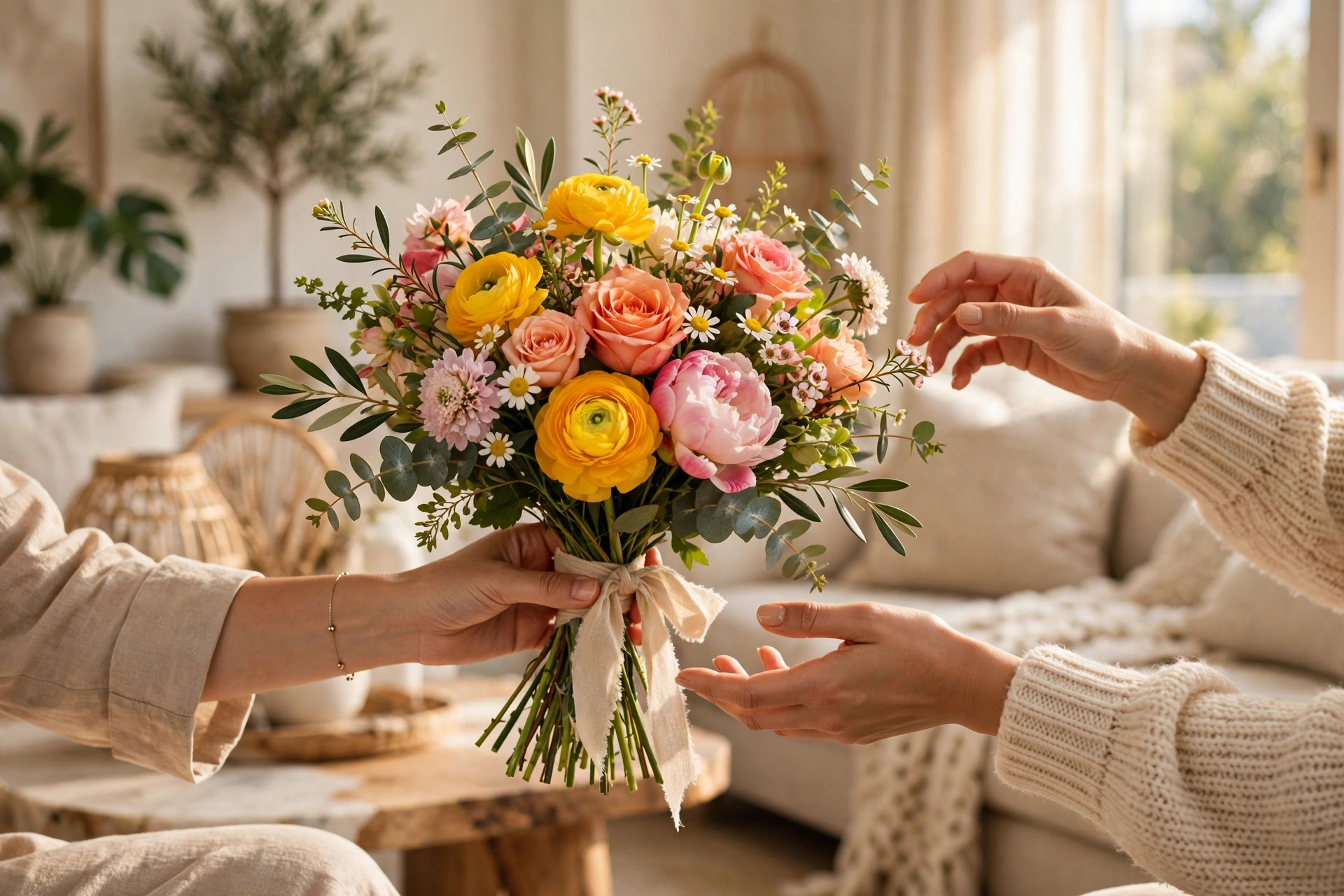
Cheer-up cards are deceptively difficult — the wrong words minimise (“cheer up!”), the right words comfort. The golden rule: acknowledge the feeling before offering the lift. “I heard this week’s been brutal — thinking of you” validates before it brightens. Specificity helps enormously: “You handled that presentation with such grace under pressure” beats generic encouragement because it proves you were paying attention. For illness: “Wishing you steady recovery — no rush, just rest.” For heartbreak: “No need to reply — just wanted you to know I’m here.” For stress: “This will pass. Meanwhile, flowers.” Humour, used carefully, is a legitimate cheer-up tool among close friends: “Emergency flower deployment: your week has been officially declared a disaster zone.” Avoid toxic positivity — “everything happens for a reason,” “just stay positive” — which can feel dismissive of genuine pain. And sometimes the best card is the shortest: “Thinking of you. That’s it. That’s the message.” Honesty, brevity, and warmth: the cheer-up card is not a speech, it is a hand on the shoulder.
Timing and Delivery: The Practical Kindness
When flowers arrive matters as much as what they are. For acute bad days — the day of the bad news — same-day delivery turns your gesture from thoughtful to heroic; many Dubai florists offer it, and the speed itself communicates urgency of care. For ongoing situations (a difficult month, a long recovery), consider pacing: flowers now, and a second smaller surprise in two weeks, sustains the lift far better than one grand gesture. Morning delivery is often ideal — the bouquet is there when the day starts, reframing it from the first hour. For someone working from home through a rough patch, a midday delivery breaks up the day beautifully. Practical kindness extends to the format: choose low-maintenance arrangements (a vase-ready bouquet or a self-contained box) because someone having a bad day should not face floral homework. Include care simplicity — or better, choose long-lasting varieties that forgive neglect. And if the recipient is unwell or overwhelmed, coordinate delivery thoughtfully: a text beforehand (“flowers arriving at 2 — no need to answer the door, I’ll have them left with security”) removes the pressure to perform gratitude at the doorstep. The kindest deliveries ask nothing of the recipient — not even answering the door with a smile.
Cheering Up from Afar
Dubai’s expatriate reality means many cheer-up gestures travel across time zones — comforting a friend in Dubai from London, or lifting family back home from your Dubai apartment. Distance does not diminish the gesture; if anything, flowers sent across the world carry extra poignancy (“she sent these from Sydney”). Order directly from a local florist at the recipient’s end for freshness and reliability, provide the recipient’s mobile number for delivery coordination, and write the card as if you were there — because emotionally, you are. Video-call when the flowers arrive if you can; seeing their face light up completes the circuit that distance interrupts. For recurring support from afar — a friend going through a long divorce, a parent’s extended illness — schedule periodic surprises rather than a single gesture; sustained, smaller kindnesses say “I haven’t forgotten” more powerfully than one large one. And remember time zones when ordering: a cheer-up bouquet ordered at your midnight can arrive at their breakfast — sometimes the logistics of care work out beautifully on their own.
Bad days are universal; kindness is a choice. Cheer-up flowers are one of the simplest, most reliable kindnesses available — bright colour against a grey day, proof of being noticed, beauty that asks nothing in return. Choose bold and joyful, write something true, time it with care, and let the flowers do their quiet work. You cannot fix their bad day. But you can make sure they do not face it alone — and sometimes, that is everything. For guidance on the trickier etiquette of floral gifting, our flower gifting etiquette guide for the UAE has you covered.
Frequently Asked Questions
What are the best cheer up flowers?
Bright, vibrant flowers work best: sunflowers, gerbera daisies, yellow roses, tulips, and colourful mixed bouquets. Yellow and warm bright tones (orange, coral, hot pink) are psychologically uplifting. Avoid predominantly white or dark arrangements, which can read as somber on a difficult day.
What colours should I avoid for cheer-up flowers?
Avoid all-white arrangements (they can echo sympathy flowers), very dark palettes (burgundy, near-black) that feel heavy, and deep red roses, which carry romantic rather than comforting connotations. When in doubt, go bright and cheerful — vivid colour is the active ingredient.
What should I write on a cheer-up flower card?
Acknowledge the feeling first (“I heard this week’s been brutal”), be specific rather than generic, and avoid toxic positivity like “just stay positive.” Short, honest, and warm wins: “Thinking of you. That’s it. That’s the message.” Humour works among close friends; gentleness works for deeper pain.
Can I send cheer-up flowers to a hospital in Dubai?
Yes, but choose compact, low-fragrance arrangements — many Dubai hospitals restrict strongly scented flowers like lilies in wards, and ICUs often prohibit flowers entirely. When in doubt, send a bright, gentle arrangement to the home for convalescence instead.
How quickly can cheer-up flowers be delivered in Dubai?
Many Dubai florists offer same-day delivery, which is ideal for acute bad days — the speed itself communicates care. For ongoing difficult periods, consider pacing smaller surprises over weeks rather than one grand gesture; sustained kindness lifts more durably.
Are cheer-up flowers appropriate for grief?
For grief-adjacent situations, choose gentle, respectful flowers rather than party-bright ones — this edges toward sympathy territory where restraint honours the emotion. Bright cheer-up bouquets suit setbacks, stress, illness recovery, and heartbreak; true grief calls for a softer, more dignified approach.

Valentine’s Day Flower Gifts 2026 in Dubai
Valentine’s Day in Dubai never really feels quiet. Restaurants book out early, delivery slots disappear faster than expected, and people suddenly realize they should’ve planned
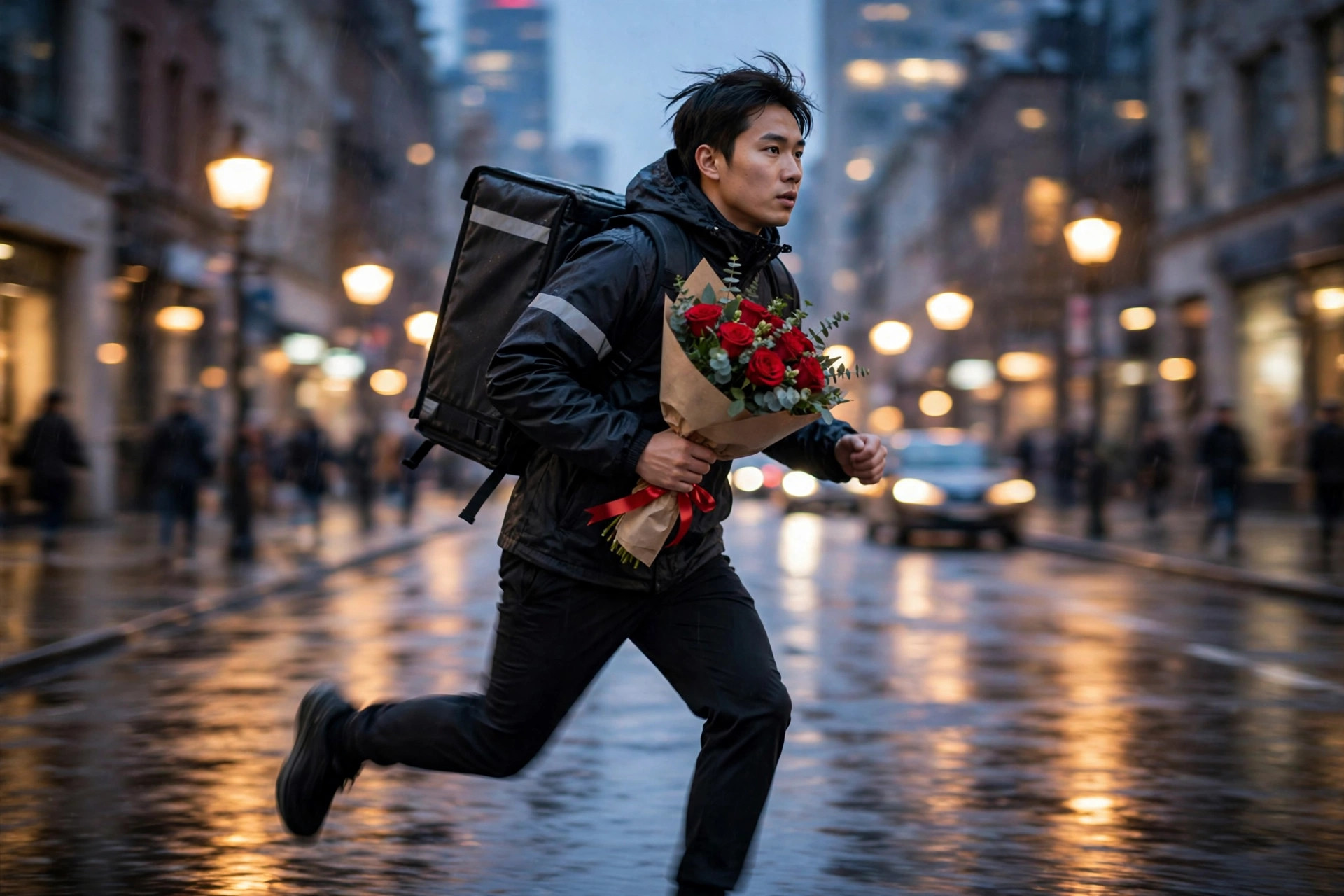
Same Day Flowers Delivery on Valentine’s Day 2026 in Dubai
Valentine’s Day has a way of sneaking up on us. One moment you’re thinking you have plenty of time, and the next — it’s already
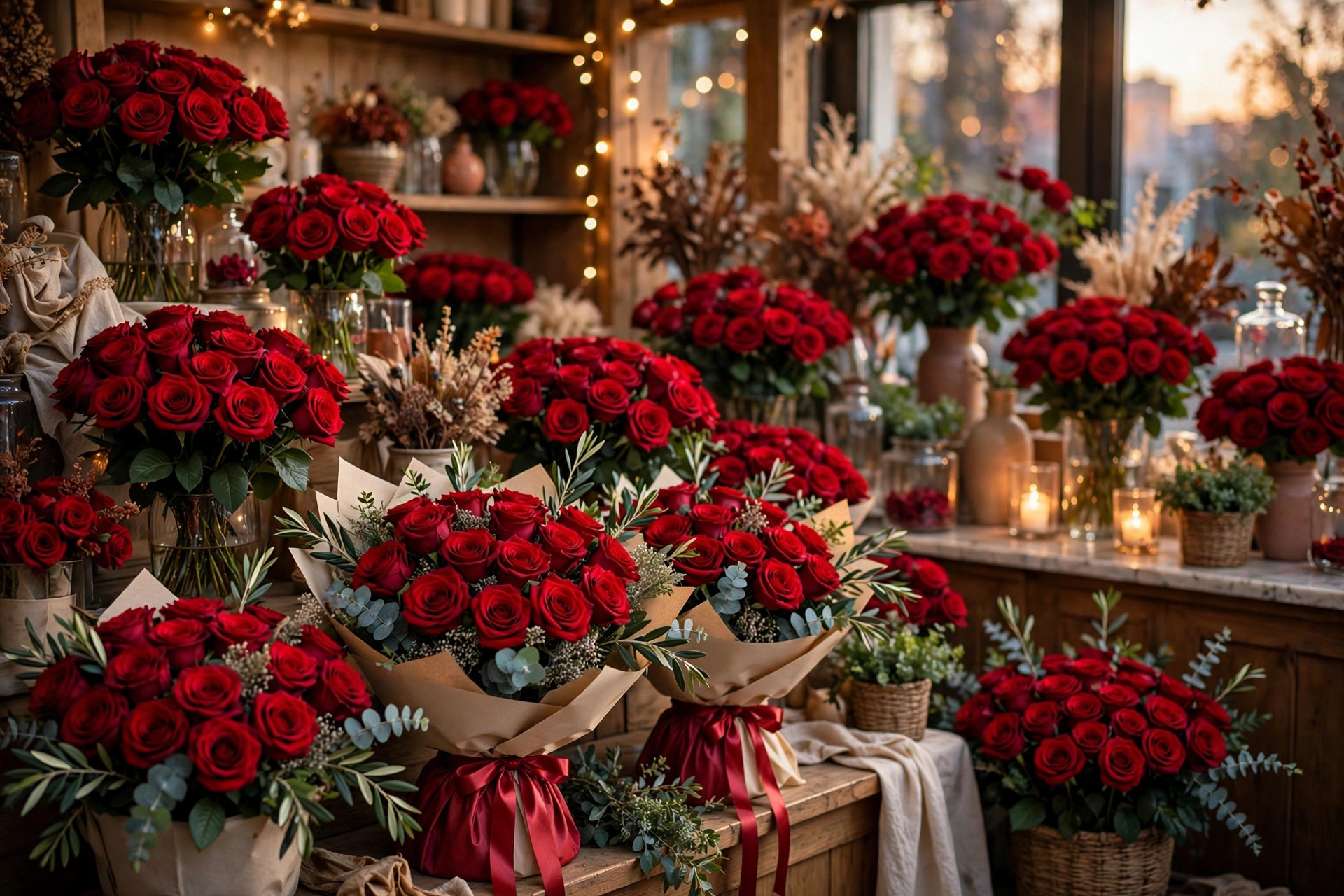
Valentine’s Day Roses Sale 2026 in Dubai: A Good Time to Plan Something Meaningful
Valentine’s Day has a way of arriving faster than expected. One moment it’s early January, and the next thing you know, restaurants are booked and