
With their dense, jewel-like heads and extraordinary range of colours, chrysanthemums are among the most rewarding flowers a Dubai home can host. Known affectionately as “mums,” these blooms carry centuries of meaning — from imperial Japan, where the chrysanthemum is the symbol of the throne itself, to Chinese art, where it represents autumn’s quiet nobility. In the Emirates, chrysanthemums are prized for something more practical too: they are one of the longest-lasting, most heat-tolerant cut flowers available, holding their beauty for two weeks or more. Whether you are drawn to their symbolism or their staying power, this guide covers everything about chrysanthemums in Dubai.
The Meaning and Symbolism of Chrysanthemums
Few flowers carry as much cultural weight as the chrysanthemum. In Japan, the sixteen-petalled chrysanthemum crest is the Imperial Seal — the flower represents the emperor, longevity, and rejuvenation, and the country celebrates Chrysanthemum Day (Kiku no Sekku) each autumn. In China, the mum is one of the “Four Gentlemen” of art (alongside orchid, bamboo, and plum blossom), symbolising endurance and the noble character that blooms when other flowers fade.
In Victorian floriography — the language of flowers that still shapes Western gifting — chrysanthemums speak of friendship, loyalty, and devoted love. Red mums declare romantic love; white mums signify purity and honest intentions; yellow mums, once associated with slighted love in Victorian times, are now simply read as cheerful and sunny in modern gifting. In the multicultural context of Dubai, where a bouquet may be given by an Indian colleague to an Egyptian friend for a Filipino neighbour’s housewarming, the chrysanthemum’s universal associations — friendship, longevity, good cheer — make it one of the safest and most versatile flowers you can choose.
Chrysanthemum Varieties You’ll Find in Dubai
The UAE’s flower markets and florists stock an impressive range of mums, most imported from the Netherlands, Colombia, and increasingly from regional growers.
Disbud and standard mums
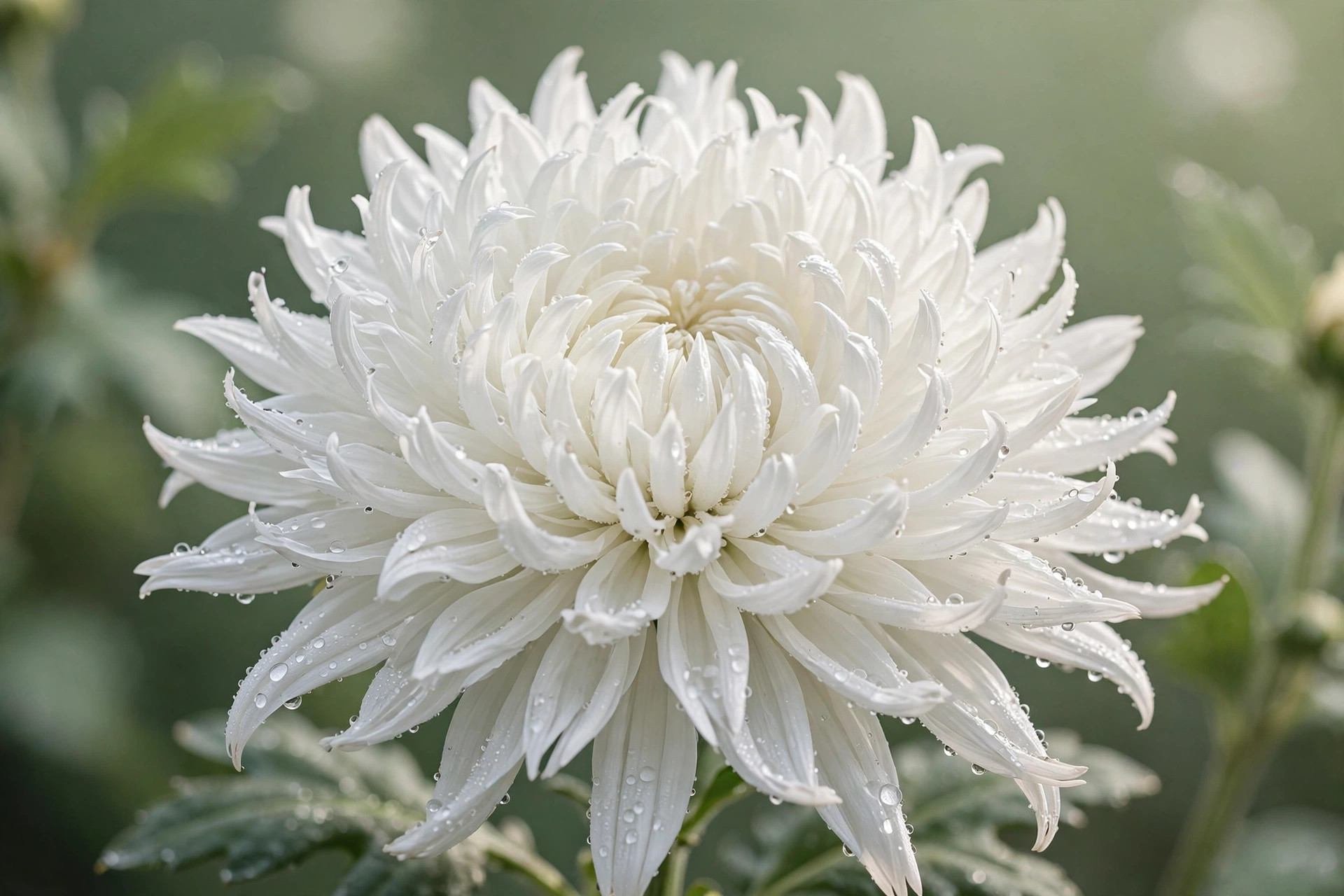
The classic large-headed chrysanthemum — a single magnificent bloom per stem, sometimes as wide as a teacup. Available in white, yellow, bronze, pink, and green, these are the statement mums for elegant arrangements and sympathy designs.
Spray mums (Santini)
Multiple smaller blooms per stem — the versatile workhorses of mixed bouquets. Santini varieties come in jewel tones and novel bi-colours, adding texture and fullness to hand-tied bouquets.
Spider and quill mums
With long, tubular petals that curl and twist, these architectural varieties bring drama to modern arrangements. The “Anastasia” spider mum in lime green is a Dubai florist favourite for contemporary designs.
Pompon and button mums
Tight, perfectly round little spheres of petals — charming in posies, boutonnières, and low table arrangements. Their neat geometry suits minimalist décor.
Dyed and novelty mums
White mums absorb dye beautifully, so Dubai’s markets offer blue, rainbow, and even black-tinted chrysanthemums for themed events — popular for National Day arrangements and bold party décor.
Why Chrysanthemums Are Perfect for Dubai
Chrysanthemums might be the most practical luxury flower in the Emirates. Their vase life is exceptional — ten days is typical, two weeks is common, and three is not unheard of with good care. They tolerate warmth far better than roses or tulips, making them reliable even in summer. They are remarkably affordable for their impact, so a grand, generous arrangement costs less than you would expect. And their dense petal structure means they look full and fresh from every angle, which is why event florists across Dubai rely on them for large-scale installations, stage décor, and wedding halls where hundreds of stems must look perfect for hours.
There is one caution worth noting: chrysanthemums belong to the daisy family (Asteraceae), and people with ragweed or daisy-family pollen sensitivities can react to them. They are also toxic to cats and dogs if ingested, so pet-owning households should display them out of reach or choose pet-safe alternatives like roses or orchids.
Chrysanthemum Care: Keeping Mums Fresh for Weeks
- Recut stems at an angle. Trim 2–3 cm off each stem under running water before arranging. Mums drink heavily — a fresh cut maximises uptake.
- Strip lower foliage. Remove any leaves that would sit below the waterline to prevent bacterial growth.
- Use lukewarm water with flower food. Mums respond well to commercial flower food; change the water every two to three days.
- Keep them cool. Like all cut flowers, mums last longest away from direct sun, heating vents, and ripening fruit.
- Remove spent blooms. On spray varieties, snip off individual faded heads — the remaining buds will continue to open and the arrangement stays fresh-looking.
- Watch the water level. Dense mum heads transpire steadily; check the vase daily and top up so stems never stand dry.
Chrysanthemums for Every Occasion
Sympathy and remembrance
Across many cultures — European, East Asian, and Middle Eastern — white chrysanthemums are the traditional flower of mourning and remembrance. In Dubai’s multicultural community, a dignified arrangement of white disbud mums is a universally understood expression of sympathy. Florists here are experienced in preparing culturally appropriate condolence arrangements; don’t hesitate to ask for guidance.
Celebrations
Don’t let the sympathy association limit you — in most modern contexts, colourful mums are pure celebration. Bronze and gold mums glow at autumn gatherings; pink and coral santinis brighten birthdays; green “Anastasia” spiders bring contemporary edge to congratulations bouquets.
Home décor
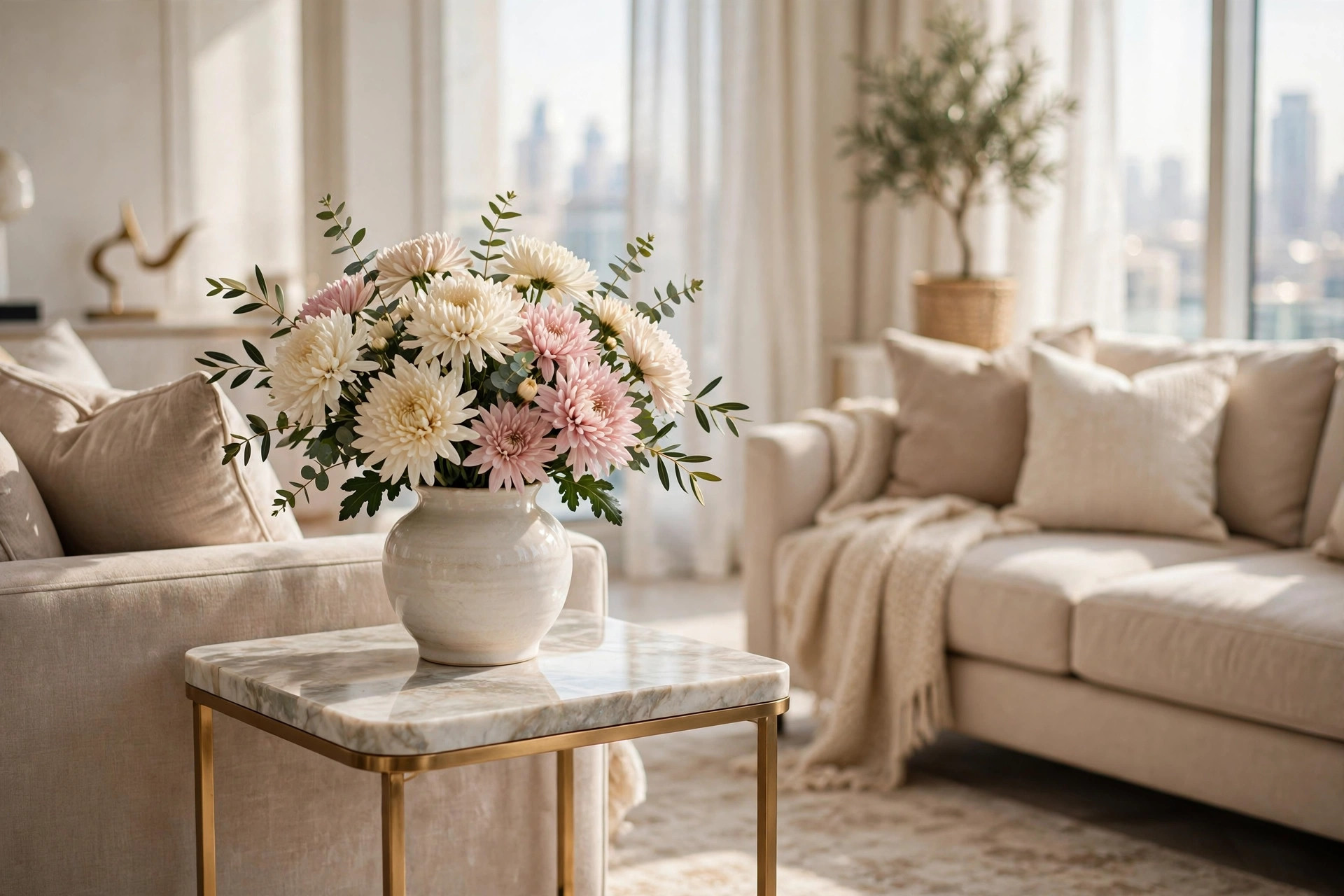
A single variety massed in a vase — twenty white disbud mums in a tall cylinder, or a cloud of lime-green spiders in a low bowl — is one of the chicest floral looks there is, and it lasts for weeks. For Dubai apartments, mums offer the best beauty-per-dirham of any cut flower.
Corporate and events
Their longevity, affordability, and structural reliability make mums the backbone of Dubai’s event floristry — from conference centrepieces that must survive three days to National Day installations in flag colours.
Growing Chrysanthemums in the UAE
Garden mums can be grown in the Emirates, but they demand the right season. Plant nursery-bought potted mums in October or November, when nights cool — they will bloom gloriously through winter and spring. Give them morning sun and afternoon shade, rich well-draining soil, and consistent water. As temperatures climb past 35°C, flowering fades and plants may go dormant; many Dubai gardeners treat garden mums as a spectacular winter annual, replanting fresh each autumn. Potted mums on a shaded balcony, brought indoors during the fiercest heat, can sometimes be coaxed into a second season — pinch back spent blooms to encourage reblooming.
Chrysanthemums in Asian Floral Traditions
To fully appreciate the chrysanthemum, it helps to know how deeply it is woven into East Asian life — knowledge that matters in Dubai, where so many residents carry these traditions with them. In Japan, the chrysanthemum festival Kiku no Sekku on the ninth day of the ninth month is one of the country’s five sacred festivals, celebrating longevity with chrysanthemum sake and elaborate displays of trained blooms. Japanese gardeners cultivate mums into astonishing forms — single stems bearing hundreds of blossoms, or shaped into fans and cascades — an art called kiku-zukuri. In China, chrysanthemum tea is a daily ritual believed to cool and cleanse, and the flower appears in classical poetry as the emblem of the scholar who keeps his integrity when all around him fades. In Korea, mums decorate ancestral rites and autumn celebrations. When you give chrysanthemums to East Asian friends or colleagues in Dubai, you are offering a flower they have honoured since childhood — a gesture of cultural respect that goes far beyond decoration.
Pairing Chrysanthemums with Other Blooms
Mums play beautifully with others. White disbud mums with red roses create a classic, formal combination for events. Lime-green spider mums add contemporary edge to blush rose bouquets. Bronze mums with orange ranunculus (in season) make a stunning autumn arrangement. For sympathy designs, white mums with white lilies and soft greenery form the traditional dignified trio. And in mixed everyday bouquets, spray santinis fill gaps between larger blooms while adding jewel-toned depth. The rule is simple: let the mum’s dense texture contrast with something softer or more open — roses, lisianthus, or orchids — and the combination always looks intentional.
Frequently Asked Questions
What do chrysanthemums symbolise?
Chrysanthemums symbolise longevity, loyalty, friendship, and devoted love. In Japan they represent the imperial throne and rejuvenation; in Western floriography, red mums declare love, white mums signify purity, and yellow mums convey cheerfulness.
How long do chrysanthemums last in a vase?
Chrysanthemums are among the longest-lasting cut flowers — ten days is typical and two to three weeks is common with fresh water, stem trims, and a cool display spot. They also tolerate Dubai’s warmth better than most blooms.
Are chrysanthemums appropriate for sympathy in Dubai?
Yes — white chrysanthemums are a traditional and universally understood expression of sympathy across many of the cultures represented in Dubai. Your florist can prepare a dignified, culturally appropriate condolence arrangement.
Are chrysanthemums safe for pets?
No — chrysanthemums contain pyrethrins and are toxic to cats and dogs if ingested, causing drooling, vomiting, and diarrhoea. Display them out of pets’ reach, or choose pet-safe alternatives like roses, orchids, or gerberas.
Can I grow chrysanthemums in Dubai?
Yes, as a winter seasonal: plant potted mums in October–November for blooms through spring, in morning sun with afternoon shade. Most Dubai gardeners treat them as a winter annual, replanting fresh each autumn.
Why are chrysanthemums so popular for events in Dubai?
Their exceptional vase life, heat tolerance, affordability, and dense, photogenic blooms make them ideal for large-scale event décor — from wedding halls to conference centrepieces and National Day installations.
Best Flowers to Gift on New Year’s Eve
As the clock ticks down on the final moments of the year, people around the world gather to celebrate new beginnings. Among the fireworks and
Valentine’s Day Flower Gifts 2026 in Dubai
Valentine’s Day in Dubai never really feels quiet. Restaurants book out early, delivery slots disappear faster than expected, and people suddenly realize they should’ve planned
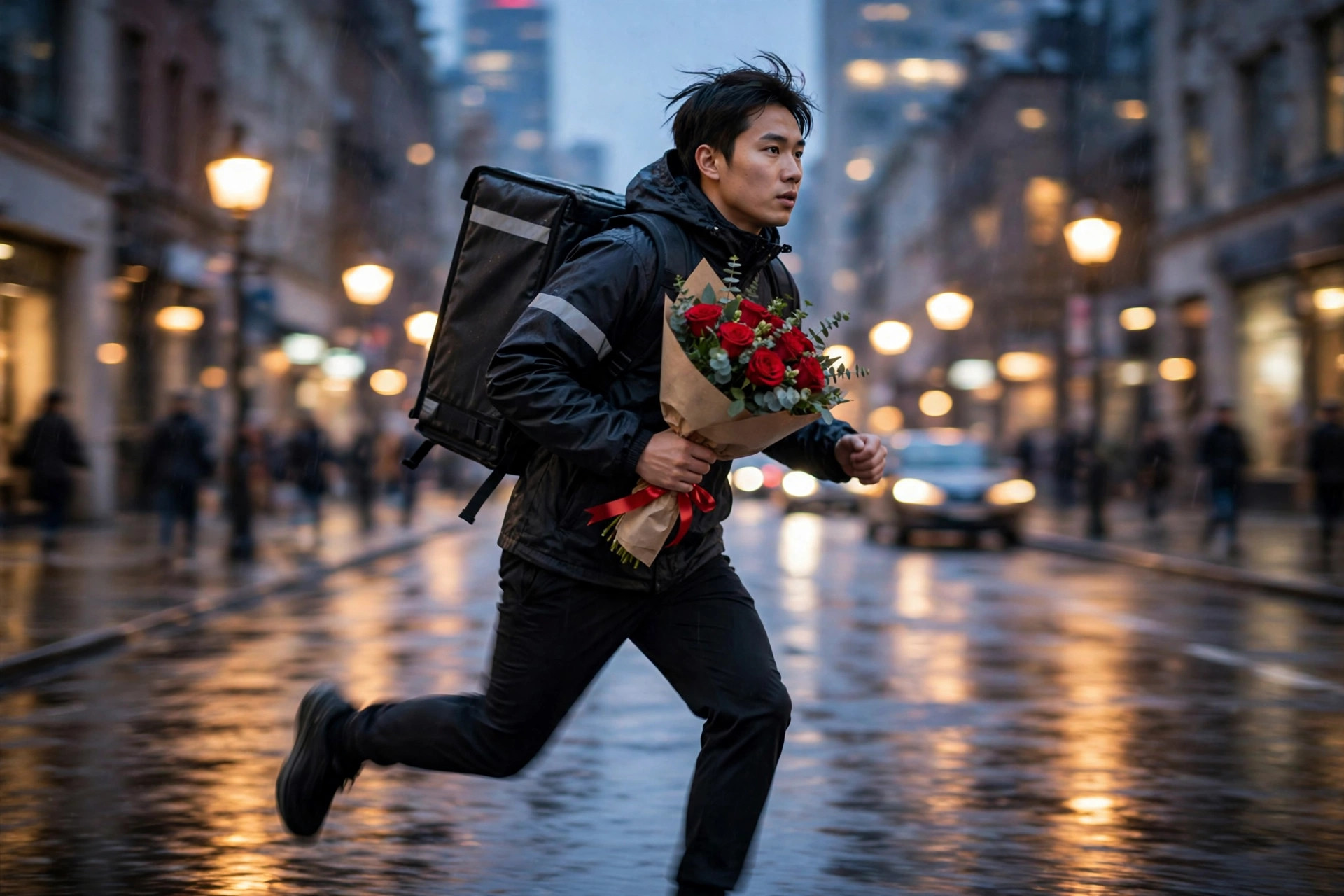
Same Day Flowers Delivery on Valentine’s Day 2026 in Dubai
Valentine’s Day has a way of sneaking up on us. One moment you’re thinking you have plenty of time, and the next — it’s already