
In the United Arab Emirates, flowers speak a language everyone understands — but like any language, they have their grammar. With more than 200 nationalities calling the UAE home, a single bouquet might be received by an Emirati family in Abu Dhabi, a British executive in DIFC, or an Indian couple celebrating Diwali in Bur Dubai. Each brings their own traditions, expectations, and quiet rules about what flowers mean. Getting flower gifting etiquette right in the UAE is not about memorizing a rigid rulebook; it is about showing the thoughtfulness that makes a gift land exactly as intended. This guide walks through the practical etiquette of giving flowers in the UAE — which colours suit which moments, how business gifting differs from personal gifting, what to write on the card, and the small presentation details that separate a good gift from a memorable one.
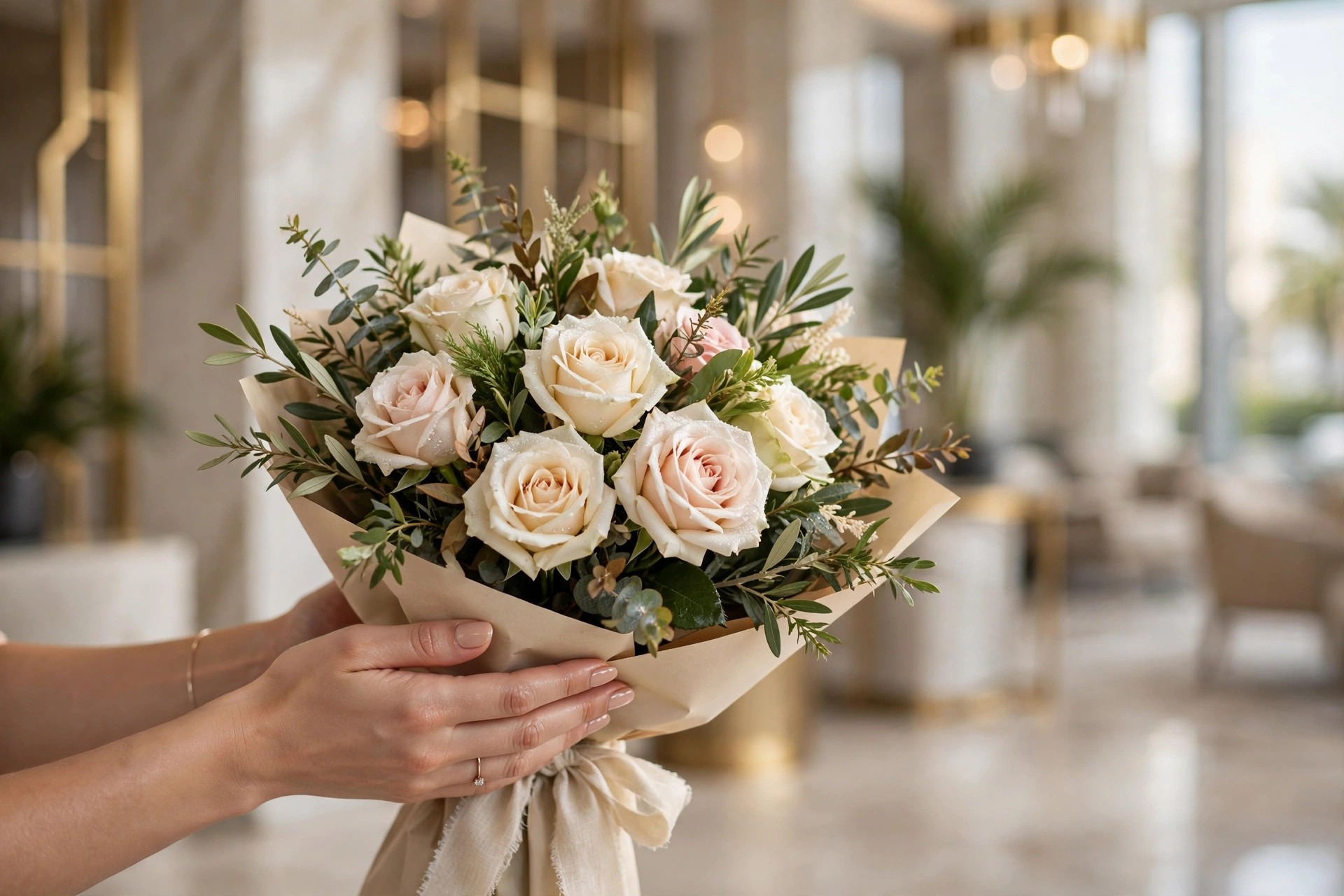
Start with the Occasion, Not the Flowers
The single most common etiquette mistake is choosing flowers before defining the moment. A grand romantic gesture delivered to a colleague’s desk raises eyebrows; a modest bouquet at a golden anniversary can feel underwhelming. Before you browse a single stem, ask yourself three questions: what is the relationship, what is the occasion, and where will the flowers be received? The answers shape everything — size, colour, style, and even the hour of delivery. A birthday calls for joyful, generous colour. A promotion deserves something polished and confident. A hospital visit needs compact, low-fragrance arrangements that nurses will actually allow in the room. In the UAE’s professional culture, flowers frequently mark business milestones — new office openings, successful deals, welcoming a visiting delegation — and the tone there is formal and restrained rather than exuberant. Match the scale of the gesture to the weight of the moment, and you will rarely go wrong.
Colours Carry Meaning — Choose with Intention
In a multicultural society, colour symbolism overlaps and occasionally collides. The safest approach is to pick colours whose meaning is positive across the cultures you are likely to encounter in the UAE.
Colours that are almost always safe
White flowers communicate purity, respect, and new beginnings across most cultures, making them the default for formal occasions, condolences, weddings, and religious celebrations. Soft pastels — blush pink, peach, lavender — read as gentle and affectionate, perfect for thank-yous, birthdays, and new babies. Vibrant mixed colours signal celebration without committing to any single symbolic message, which makes mixed bouquets the most versatile safe choice of all. Yellow, associated with friendship and joy in Western traditions, is widely welcomed at cheerful occasions, though worth noting that in some contexts it can carry other connotations — context matters more than the colour itself.
Colours to handle with care
Red is the colour of romance above all else. A dozen red roses sent to a business contact or a friend’s spouse can send entirely the wrong message, no matter how innocent the intent. Reserve deep reds for romantic partners and save them for moments where passion is exactly the point. Very dark or all-black arrangements, trendy in some Western aesthetics, can read as funereal in the UAE and are best avoided unless you know the recipient’s taste intimately. All-white arrangements, while elegant, are strongly associated with sympathy in many Asian and Middle Eastern traditions — beautiful for a wedding or a condolence gesture, but think twice before sending them for a birthday. The rule of thumb: the more formal or culturally sensitive the occasion, the more you should lean on classic, widely understood palettes rather than fashion-forward experiments.
Numbers, Timing, and the Little Rules
Unlike some cultures with strict rules about odd and even stem counts, the UAE has no single dominant tradition — which is itself useful to know. Among some European recipients, even numbers of stems are associated with funerals, so an odd-numbered bouquet (nine, eleven, fifteen stems) is a thoughtful default when gifting to Western colleagues. For Emirati and Arab recipients, generosity of presentation matters more than arithmetic; a full, lush arrangement reads as respectful and warm. Timing also carries etiquette weight. Delivering flowers to someone’s office is perfectly acceptable in Dubai’s work culture and often delightful, but consider sending them to arrive mid-morning rather than first thing, and always include a card so colleagues are not left guessing. For home deliveries, late morning or early afternoon is ideal — early enough to be enjoyed all day, never so late as to disturb an evening. During Ramadan, schedule deliveries outside fasting hours’ most sensitive windows and lean toward modest, elegant arrangements; many people time their gifting for iftar gatherings or Eid itself. And when someone is hosting you for dinner, having flowers delivered earlier in the day is more considerate than arriving with a bouquet that the host must immediately find a vase for while greeting guests.
Business Gifting Etiquette in the UAE
Corporate flower gifting follows its own quiet code. In Emirati business culture, hospitality and generosity are deeply valued, and flowers given to mark a partnership, a successful negotiation, or a visitor’s arrival are received graciously — but the presentation should be dignified rather than flamboyant. Choose structured, architectural arrangements over loose romantic styles; orchids, lilies, and elegant mixed arrangements in neutral or brand-complementary tones work beautifully. Always include a professionally worded card with your full name, title, and company — anonymous corporate flowers create confusion, not delight. Be mindful of gender dynamics in more traditional business settings: sending flowers to a male business associate is completely fine in the UAE when the occasion is professional (a promotion, a new office, a conference), but keep the arrangement tasteful and the message strictly professional. For female colleagues, the same applies — celebratory and respectful, never intimate in tone. When gifting to a government office or a senior official’s majlis, grandeur is appropriate and expected; a modest bouquet can inadvertently signal a modest regard.
When Flowers Need Extra Sensitivity
Certain occasions demand a more careful hand. For condolences, flowers are appreciated by many families in the UAE, but customs vary enormously by faith and nationality. Muslim funeral traditions generally do not include flowers at the service itself, though sending a dignified white arrangement to the family’s home afterward is often welcomed as a gesture of sympathy. Christian, Hindu, and other communities each have their own customs. When you are unsure, a simple message of condolence with an offer of practical help is never wrong, and a florist experienced in the UAE market can guide you on what is appropriate for the specific community. Hospital etiquette deserves mention too: many Dubai hospitals restrict strongly scented flowers like lilies in wards, and intensive care units often prohibit flowers entirely — a compact, low-fragrance arrangement sent to the home for recovery is the safer play. New-baby flowers are joyful, but keep them away from the nursery if anyone mentions sensitivities, and consider that the parents’ hands are full — a low-maintenance arrangement or a longer-lasting orchid plant shows extra thought. The underlying principle is simple: etiquette is empathy in action. A moment’s consideration of the recipient’s circumstances is worth more than the most expensive bouquet.
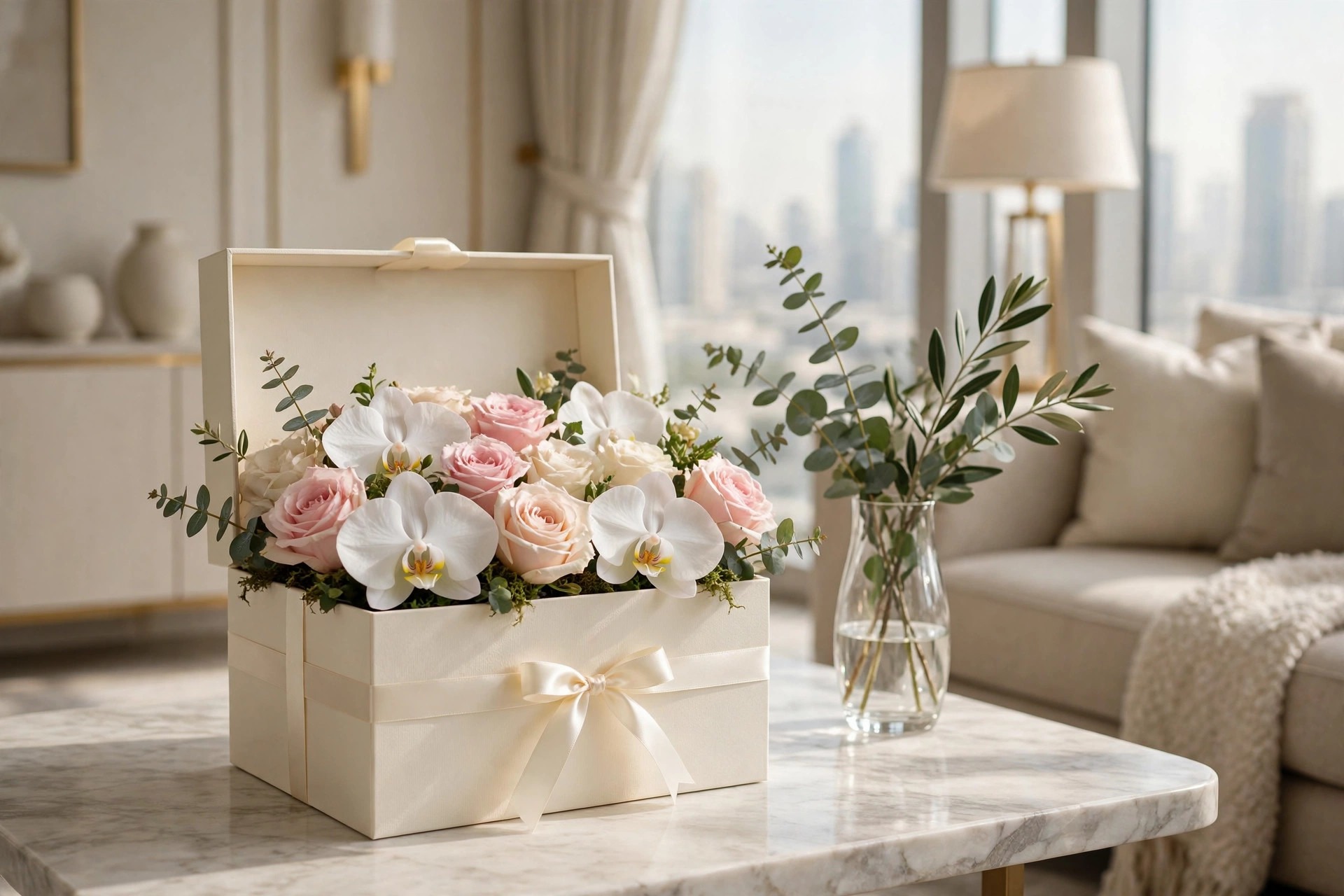
Presentation Details That Speak Volumes
In the UAE’s luxury-conscious culture, presentation is not vanity — it is part of the message. A bouquet’s wrapping, the quality of the box or vase, and the condition of the blooms on arrival all communicate how much thought went into the gift. Choose reputable florists known for careful packaging, because flowers that arrive wilted or crushed undo all your good intentions. For formal occasions, a hatbox or signature gift box arrangement often reads as more prestigious than a hand-tied bouquet, while hand-tied styles feel more personal and artisanal — match the format to the relationship. Always remove price tags and delivery paperwork before the recipient sees the gift; if you are hand-delivering, carry the bouquet with the blooms protected and present it with the card facing the recipient. Freshness matters enormously in Dubai’s climate, so same-day delivery from a local florist beats a bouquet that has travelled for days.
What to Write on the Card
The card is where etiquette becomes personal. Keep business messages brief and warm: “Congratulations on the new office — wishing you every success. Warm regards, [Name], [Company].” For personal occasions, be specific rather than generic; “Happy birthday” is fine, but “Happy birthday — hope this year brings you everything you’ve been working toward” is better. In the UAE, it is gracious to acknowledge the occasion in culturally aware terms: “Eid Mubarak,” “Wishing you a blessed Ramadan,” or “Congratulations on your new arrival” all show attentiveness. Avoid overly familiar language with people you do not know well, skip humour that might not translate across cultures, and never include anything you would not want read aloud in front of the recipient’s family or colleagues. Sign with your full name unless the relationship is genuinely close — in a city of lookalike names and vast networks, “Ayesha” alone may leave the recipient guessing. If the flowers accompany an apology, let the card do the emotional work the flowers cannot: name what you are sorry for, simply and without excuses.
Flower gifting in the UAE rewards the giver who thinks before they send. The etiquette is not complicated — consider the occasion, respect the culture, choose colours with intention, present beautifully, and write something real on the card. Do that, and your flowers will do what they are meant to do: make someone feel genuinely seen. For a deeper look at blooms to avoid in sensitive contexts, our guide on what flowers not to send in the UAE explores cultural considerations in more detail.
Frequently Asked Questions
Is it appropriate to send flowers to a business associate in the UAE?
Yes, corporate flower gifting is well established in the UAE and warmly received when the occasion is professional — promotions, new offices, successful partnerships, or welcoming visitors. Keep arrangements elegant and structured, the card message strictly professional, and include your full name and company so the gesture is clearly attributed.
Are there flower colours I should avoid in the UAE?
Deep red is strongly associated with romance, so avoid it for colleagues, acquaintances, or anyone where a romantic message would be inappropriate. All-white arrangements can read as funereal in some Asian and Middle Eastern traditions, so consider them carefully for celebratory occasions. When unsure, mixed pastel or vibrant mixed bouquets are the safest choice.
Should I send flowers to someone’s office or home in Dubai?
Both are acceptable. Office deliveries are common in Dubai’s work culture and often create a lovely moment, especially for birthdays and promotions — aim for mid-morning arrival and always include a card. Home deliveries feel more personal and are better for intimate occasions, apologies, or when you want privacy around the gesture.
What is the etiquette for sending flowers during Ramadan?
Flowers are a thoughtful gift during Ramadan, particularly for iftar gatherings or Eid celebrations. Choose modest, elegant arrangements, schedule deliveries at considerate hours, and consider timing your gift for the Eid festivities at the month’s end, when celebratory gifting is most customary.
Is it okay to send flowers for condolences in the UAE?
It depends on the family’s faith and cultural background. Muslim funeral traditions typically do not include flowers at the service, though a dignified white arrangement sent to the home afterward is often appreciated. For other communities, sympathy flowers are customary. When uncertain, ask a knowledgeable local florist or simply send condolences with an offer of help.
How important is the card message when gifting flowers in the UAE?
Very important. In the UAE’s relationship-driven culture, the written message personalises the gift and shows genuine thought. Be specific, sign your full name unless the relationship is close, keep business messages professional, and avoid humour that might not translate across cultures.
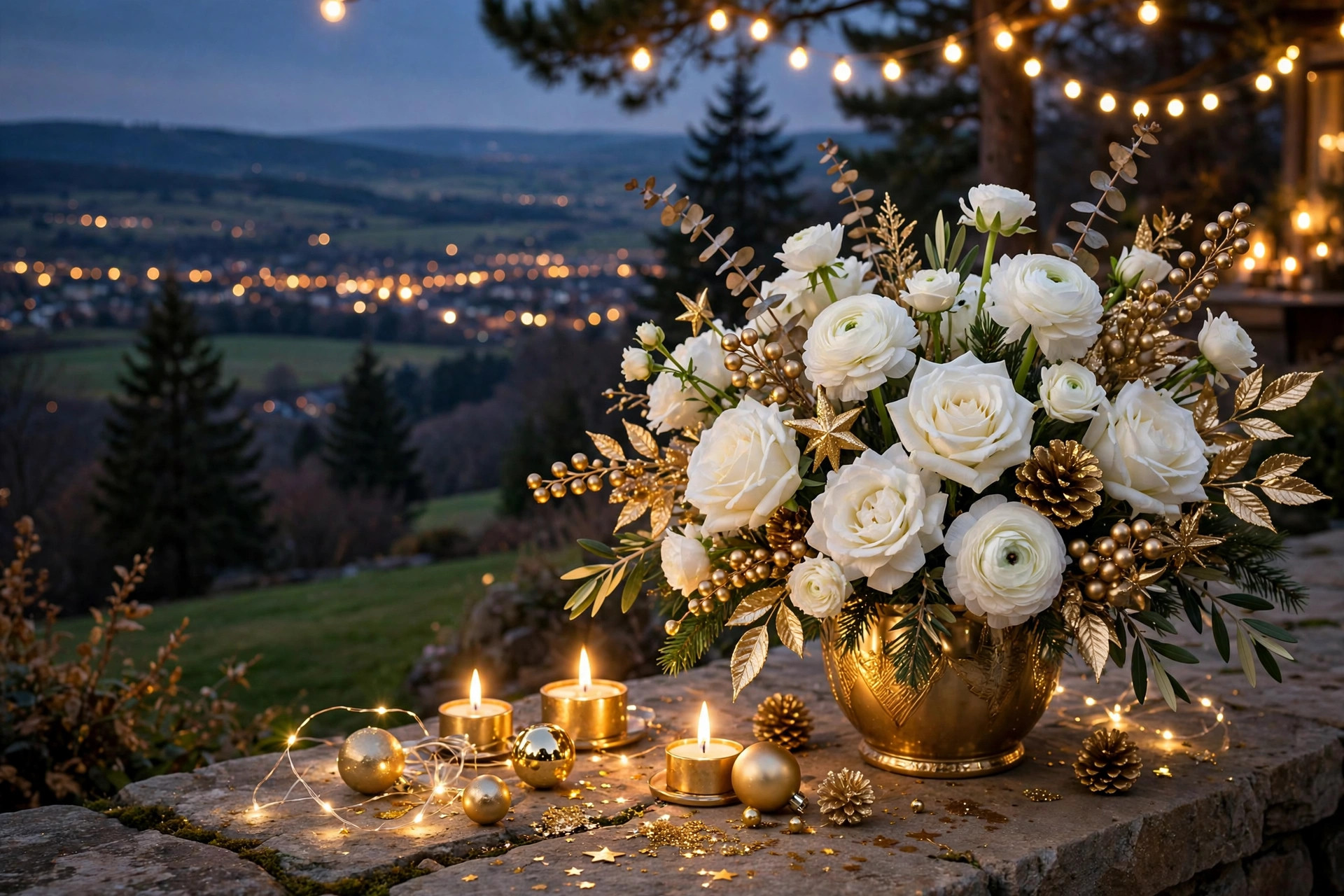
Best Flowers to Gift on New Year’s Eve
As the clock ticks down on the final moments of the year, people around the world gather to celebrate new beginnings. Among the fireworks and

Valentine’s Day Flower Gifts 2026 in Dubai
Valentine’s Day in Dubai never really feels quiet. Restaurants book out early, delivery slots disappear faster than expected, and people suddenly realize they should’ve planned

Same Day Flowers Delivery on Valentine’s Day 2026 in Dubai
Valentine’s Day has a way of sneaking up on us. One moment you’re thinking you have plenty of time, and the next — it’s already