
When someone dies, flowers become a language for what words cannot carry. But in the UAE — home to Emiratis, expatriates from more than 200 countries, and every major world religion — the right floral gesture depends profoundly on the family’s faith and culture. Sending the wrong arrangement, or flowers where none are customary, can unintentionally add to a grieving family’s burden at the worst possible moment.
This guide offers clear, compassionate direction on funeral flowers in the UAE: when flowers are appropriate and when they aren’t, what to send for different traditions, the etiquette of condolence visits, and how to express sympathy with grace in this uniquely diverse society. If you’re reading this in a time of loss, we’re sorry — and we hope this helps you get one difficult decision right.
The Most Important Rule: Know the Family’s Tradition
Funeral customs in the UAE vary enormously, and flowers sit differently in each. For Muslim funerals, flowers are generally not customary. Islamic tradition emphasises simplicity and prompt burial; the appropriate expressions of sympathy are a personal visit or message of condolence, prayers for the deceased, and sometimes a charitable donation (sadaqah) in their name. Sending a large floral tribute to a Muslim family, however kindly meant, signals unfamiliarity with their customs — a quiet, sincere condolence means far more.
For Christian funerals — common among the UAE’s large expatriate communities — flowers are a traditional and welcome expression of sympathy. Wreaths, sprays, and standing arrangements from family and organisations, plus smaller bouquets or baskets from friends, are all customary. Hindu funerals typically involve cremation quickly after death; flower garlands (particularly marigolds) play a ceremonial role, but elaborate Western-style funeral arrangements are less central — guidance from the family or community is invaluable. For other traditions, when in doubt, ask someone close to the family or consult a florist experienced in multicultural sympathy work.
Sympathy Flowers: What to Send
Wreaths, Sprays, and Standing Arrangements
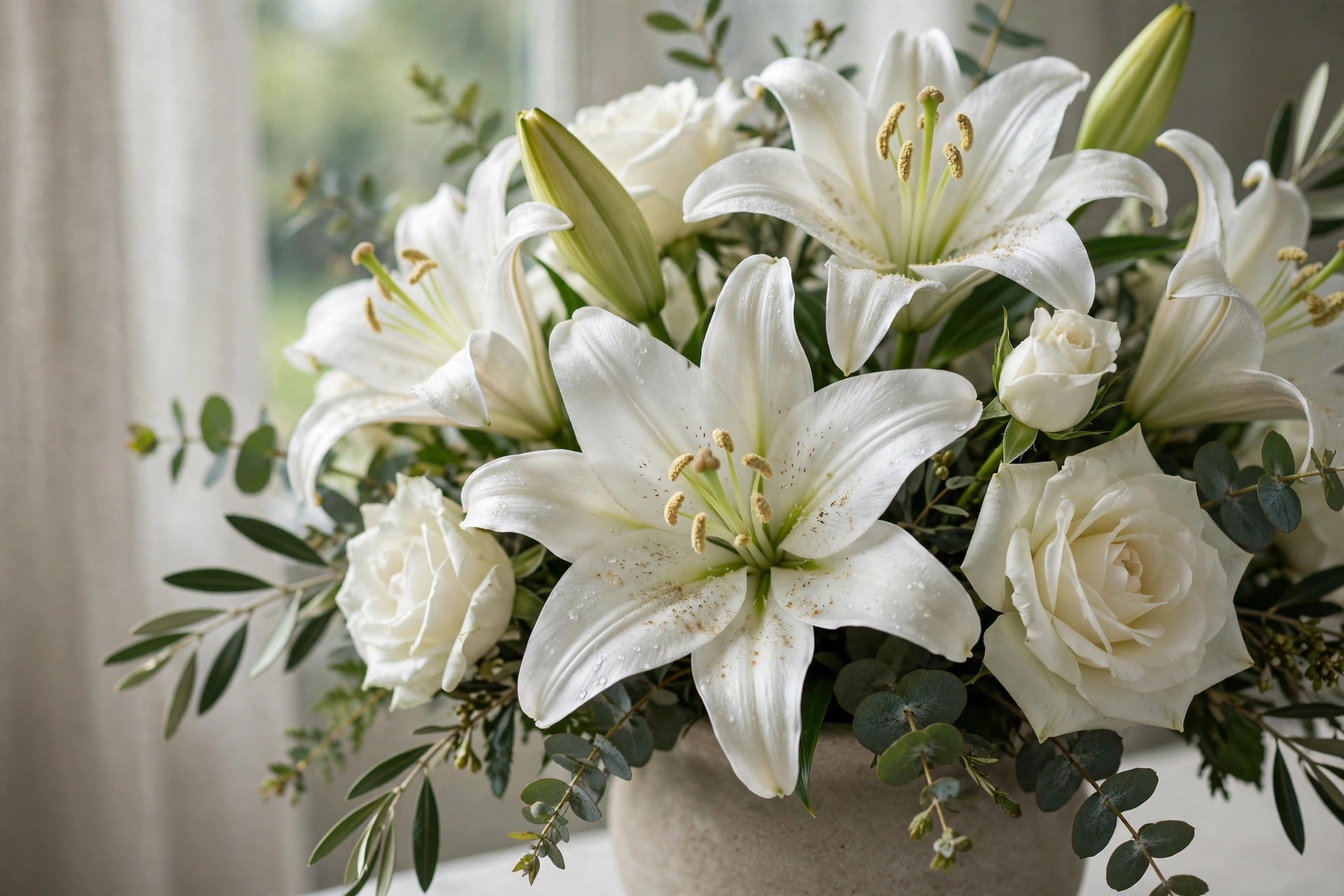
The classic funeral tributes — circular wreaths symbolising eternal life, flat sprays for the casket, and standing easel arrangements — are typically sent by immediate family, close friends, employers, and organisations. In Dubai, these are usually ordered through florists familiar with funeral work, who deliver directly to the church, funeral home, or venue. White and green palettes dominate: lilies, white roses, chrysanthemums, carnations, and orchids arranged with solemn elegance. A ribbon or card with the sender’s name and a brief message (“With deepest sympathy, the team at…”) identifies the tribute.
Bouquets and Baskets for the Family Home
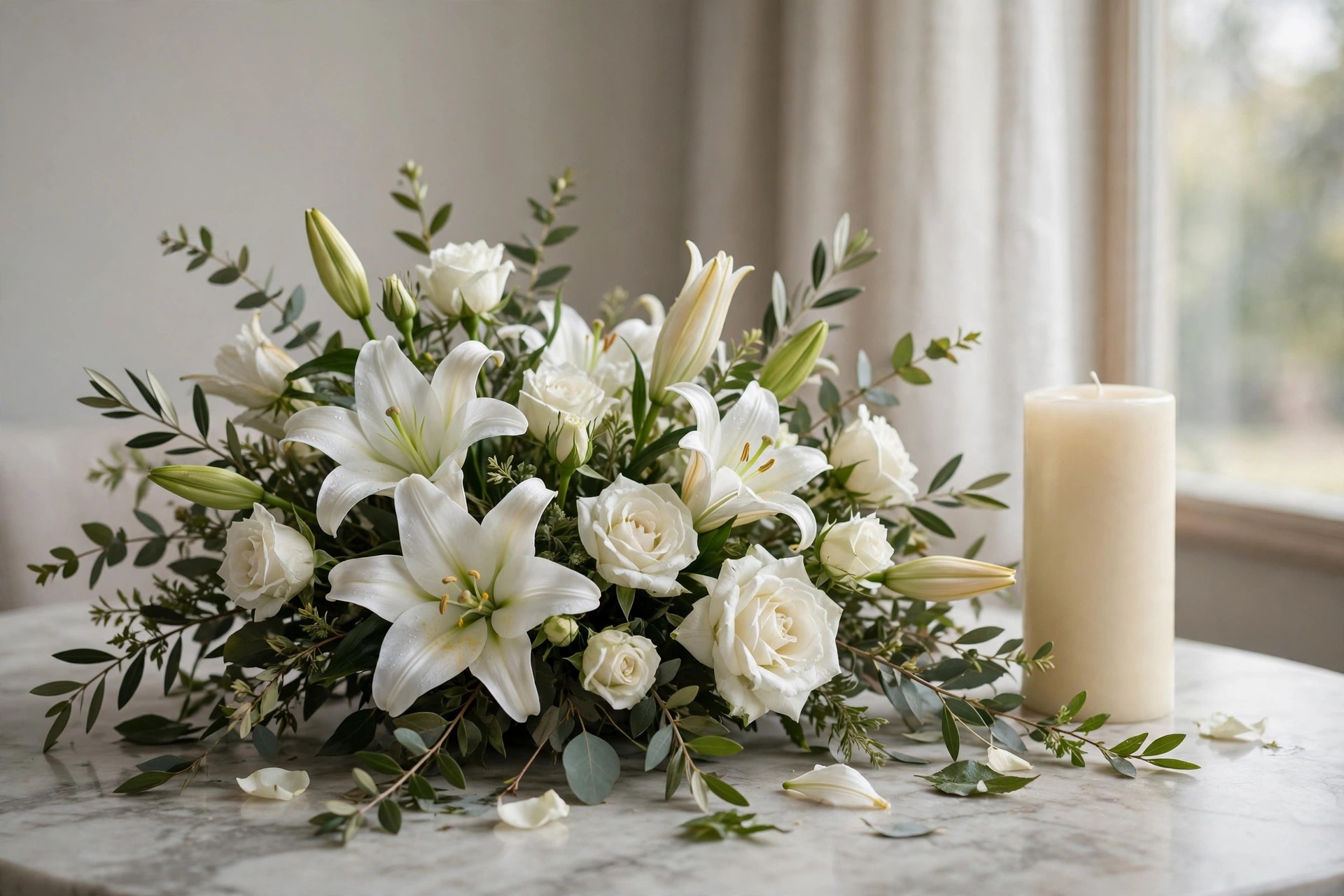
Friends and colleagues more often send sympathy bouquets or baskets to the family’s home — either before or after the service. These should be understated: soft whites, creams, pale greens, and gentle pastels, in modest sizes that comfort rather than overwhelm. A simple hand-written card matters enormously; a few sincere lines (“Thinking of you and your family in this difficult time”) outshine any grand gesture. Avoid celebratory colours — no bright reds, oranges, or festive mixes — and skip strong fragrances that might overwhelm a grieving household.
When the Family Requests “No Flowers”
Sometimes families specify “no flowers” or “in lieu of flowers, donations to…” — always honour this without exception. It reflects the family’s wishes or religious practice, and overriding it, however well intentioned, is a breach of etiquette. Make the suggested donation if you can, or simply send a heartfelt card. Your respect for their wishes is itself the tribute.
Condolence Etiquette in the UAE
Beyond flowers, the broader etiquette of condolence in the UAE deserves attention. Condolence visits (to the family’s home or a designated majlis) are an important tradition — for Muslim families, visiting to offer condolences in person is the central gesture, and your presence matters more than anything you bring. Dress modestly and sombrely, keep your visit brief unless invited to stay, and let the family guide the tone.
What to say: simple, sincere phrases are best. “I’m so sorry for your loss,” “Please accept my deepest condolences,” or for Muslim families, “May they rest in peace” and prayers for the family’s strength. Avoid platitudes (“they’re in a better place” can misfire across faiths), avoid asking for details about the death, and never discuss business or light topics. Silence and presence are perfectly acceptable — you don’t need eloquence, just sincerity.
Timing and Practicalities
Funerals in the UAE often happen quickly — Muslim burials typically within 24 hours, other services within days. This means sympathy flowers must be ordered promptly; many Dubai florists offer same-day sympathy delivery for exactly this reason. If you’ve missed the service, sending flowers or a card to the home in the following days is still appropriate and appreciated — grief doesn’t end at the funeral, and later gestures are often the most touching because the initial flood of attention has passed.
Flowers for Different Faiths: A Quick Reference
Muslim: flowers not customary; offer condolences in person or in writing, consider charitable donation. Christian (Catholic, Protestant, Orthodox): white sympathy flowers, wreaths, and sprays welcome; check any parish-specific customs. Hindu: garlands traditional in ceremony; consult family on additional florals. Buddhist: white flowers acceptable; simplicity valued. Jewish: flowers traditionally not sent; food for the family or charitable donations are customary. Sikh: simplicity emphasised; condolences and presence valued over floral tributes. When uncertain, a sincere card is never wrong.
Supporting the Grieving Beyond Flowers
The kindest sympathy extends past the funeral. In the weeks that follow, grieving families in Dubai — many far from their extended families back home — often face loneliness as much as sorrow. A meal delivered, an offer of practical help, a message weeks later saying “thinking of you” — these sustained kindnesses matter more than any single arrangement. If you’re an employer, consider bereavement leave flexibility and practical support; expatriate employees dealing with loss often navigate complex logistics around repatriation and paperwork.
Flowers, at their best, are the beginning of sympathy, not the whole of it. Choose them thoughtfully, deliver them promptly, and then keep showing up — that’s what the grieving remember.
Sympathy Flowers from the Workplace
When a colleague loses a loved one, teams often organise a collective tribute — and the etiquette has its own nuances. A single, dignified arrangement sent on behalf of the whole team or company is preferable to a dozen individual bouquets arriving at a grieving home. Collect contributions discreetly (a simple message, no pressure, no published amounts), choose a modest white arrangement, and sign the card from the group: “With sympathy from your colleagues at [Company].”
If the deceased is a colleague themselves, the company’s tribute carries extra weight — a standing spray or wreath at the service, plus practical support for the family. Keep the gesture consistent with company culture: some organisations have standing policies for bereavement flowers, which removes guesswork at emotional moments. And remember that for Muslim colleagues, the guidance above applies — organise a condolence visit or message rather than flowers, and consider a group charitable donation, which many teams find deeply meaningful.
Anniversaries of Loss: Remembering in Later Years
Grief has a long calendar. Marking the first anniversary of a death with flowers — a quiet bouquet sent to the family home with a simple “thinking of you” — is a profoundly kind gesture that few remember to make. In many cultures, annual remembrance matters deeply, and in Dubai’s transient expatriate community, being the person who remembers when others have moved on creates bonds that last. Keep it simple, keep it sincere, and keep showing up.
Frequently Asked Questions
Should I send flowers to a Muslim funeral in the UAE?
Generally no. Flowers are not customary at Muslim funerals; the appropriate gestures are a personal condolence visit or message, prayers for the deceased, and sometimes a charitable donation in their name. A sincere, brief condolence means more than any arrangement.
What colour flowers are appropriate for funerals in Dubai?
White, cream, and soft green palettes are the standard for sympathy flowers across most traditions — lilies, white roses, white orchids, and chrysanthemums. Avoid bright celebratory colours like red and orange, and keep arrangements modest and dignified rather than showy.
What should I write on a sympathy card?
Keep it simple and sincere: “Please accept my deepest condolences,” “Thinking of you and your family,” or “With heartfelt sympathy.” Avoid platitudes and religious assumptions unless you share the family’s faith. A few genuine lines outweigh lengthy, flowery prose.
Is it too late to send sympathy flowers after the funeral?
Not at all. Sending flowers or a card to the family’s home in the days or weeks after the service is appropriate and often deeply appreciated — the initial wave of attention fades quickly, and later gestures remind the grieving they haven’t been forgotten.
What does “in lieu of flowers” mean?
It means the family prefers charitable donations over floral tributes. Always honour this request — make the suggested donation if you’re able, or send a heartfelt card. Overriding the family’s stated wishes, however kindly meant, is a breach of etiquette.
Can I attend a funeral in the UAE if I’m not a close friend?
For many traditions, colleagues and acquaintances are welcome at memorial services — your presence is itself the gesture. For Muslim funerals, non-Muslim friends may pay respects at condolence gatherings; dress modestly, keep it brief, and follow the family’s lead. When unsure, a message of condolence is always appropriate.
Best Flowers to Gift on New Year’s Eve
As the clock ticks down on the final moments of the year, people around the world gather to celebrate new beginnings. Among the fireworks and

Valentine’s Day Flower Gifts 2026 in Dubai
Valentine’s Day in Dubai never really feels quiet. Restaurants book out early, delivery slots disappear faster than expected, and people suddenly realize they should’ve planned

Same Day Flowers Delivery on Valentine’s Day 2026 in Dubai
Valentine’s Day has a way of sneaking up on us. One moment you’re thinking you have plenty of time, and the next — it’s already