
It is the smallest floral element of the entire wedding — a single bloom, a whisper of greenery, pinned to a lapel. And yet the groom’s boutonnière carries disproportionate weight: it is the groom’s only flowers, his visual link to the bridal bouquet, and a detail that appears in nearly every close-up photograph of the day. Too often it is an afterthought — a generic carnation pinned on in a hurry, wilting by the speeches, slightly crooked in the album forever. But a well-chosen boutonnière is jewellery for the suit: a precise, personal detail that signals the care taken over the whole celebration. In Dubai’s heat, where delicate blooms face their toughest test, getting the boutonnière right takes a little more thought — flower choice, construction, placement, and timing all matter. This guide covers everything about the groom’s boutonnière: styles, flowers that survive, how it should relate to the bouquet, who else wears one, and how to keep it flawless from first look to last dance.
What a Boutonnière Is — and Is Not
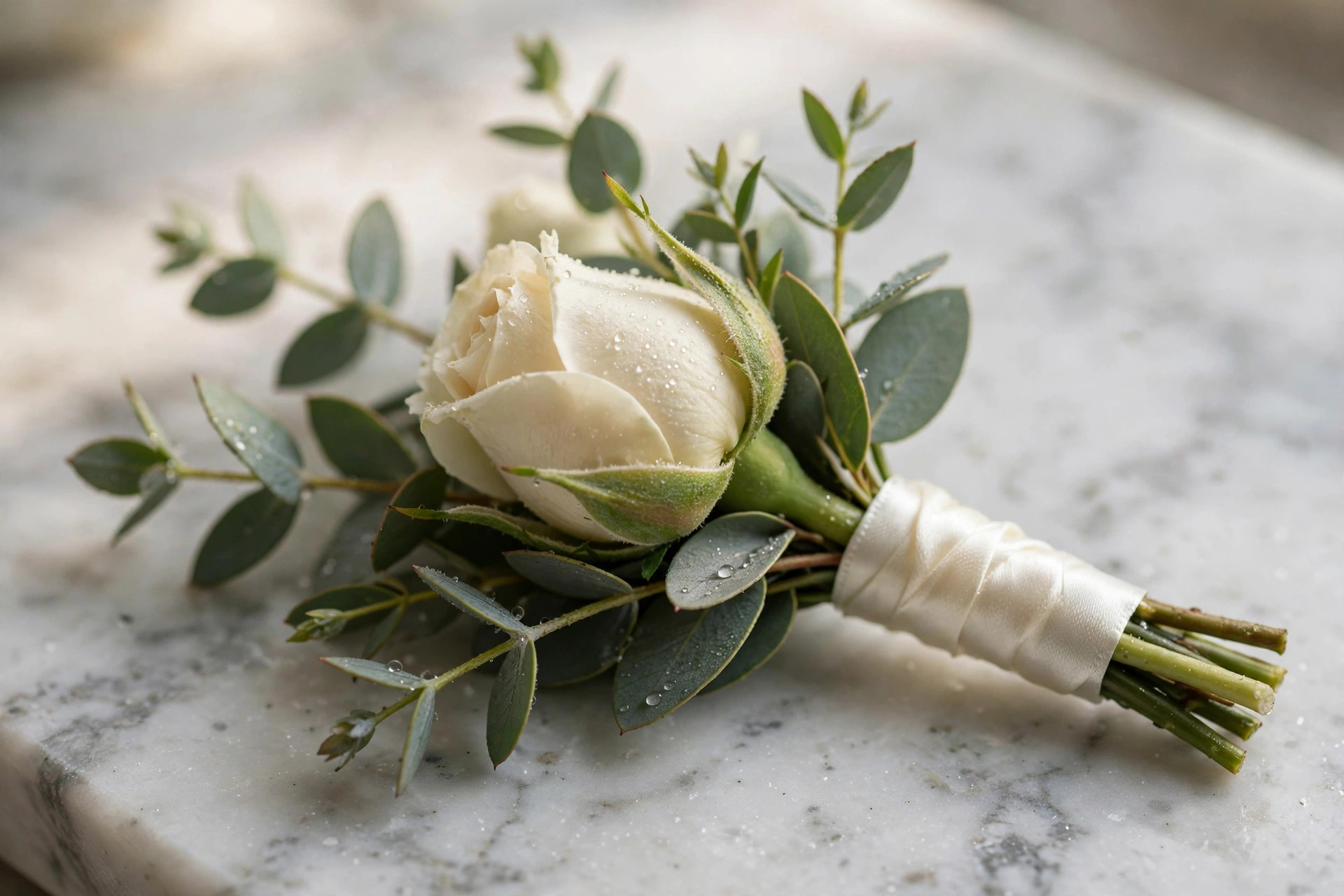
Terminology first, because confusion is common. A boutonnière (from the French for “buttonhole”) is a single flower or small cluster worn on the left lapel of a suit jacket, traditionally threaded through the lapel’s buttonhole — though modern suits often lack a functional buttonhole, in which case the boutonnière is pinned. It is not a corsage (worn on the wrist or pinned to clothing, traditionally for women), and it is not a pocket square’s replacement — the boutonnière and pocket square coexist, with the boutonnière on the lapel and the square in the breast pocket. The groom’s boutonnière is distinguished from groomsmen’s versions by being slightly larger, more elaborate, or featuring a signature bloom — it should be recognisably the groom’s at a glance. Scale is essential: a boutonnière should be proportionate to the lapel — roughly 7 to 10 centimetres — never so large it dominates the jacket or so tiny it disappears. It is worn for the ceremony and photographs, and traditionally removed for the reception’s dancing (though many grooms now wear it all day). Understanding these basics prevents the most common errors: wrong side, wrong size, or a design better suited to a corsage.
Choosing the Flower: Beauty That Survives
Dubai weddings are the ultimate stress test for boutonnieres: outdoor photographs in warmth, hours of wear, hugs from dozens of guests. Flower choice is therefore the most consequential decision. The champions of boutonnière durability are orchids (dendrobium and cymbidium miniatures are classic — waxy, structural, unfazed by heat), roses (spray roses and rosebuds hold beautifully; full-size roses can be heavy), calla lilies (mini callas are elegant and resilient), anthuriums (near-indestructible and modern), and succulents (increasingly popular for texture and absolute durability). Ranunculus, peonies, and garden roses are gorgeous but fragile — beautiful for indoor, air-conditioned weddings, risky for extended outdoor wear. Freesia and sweet peas, however lovely, wilt quickly and are best avoided. Beyond the bloom, construction determines survival: professional boutonnieres are wired and taped, with stems reinforced and sometimes backed with a water tube — a tiny reservoir that keeps the flower hydrated for hours. Ask your florist explicitly about heat-proofing; experienced Dubai wedding florists wire boutonnieres as standard and will steer you to resilient varieties. A boutonnière that looks perfect at 4 PM and tragic by 7 PM is a planning failure, not bad luck.
Styles: from classic to contemporary
Boutonnière styles span a wide aesthetic range. The classic single bloom — one rosebud or orchid with a touch of greenery — is timeless, formal, and suits traditional weddings and classic suits. The cluster boutonnière — a small grouping of two or three blooms with foliage and texture — feels more contemporary and garden-inspired, pairing well with relaxed or outdoor weddings. The foliage-forward boutonnière — dominated by interesting leaves, eucalyptus, or ruscus with a single small bloom — suits modern minimalist grooms and photographs with graphic clarity. The statement boutonnière — incorporating unusual elements like protea buds, thistles, dried elements, or succulents — is for grooms with strong personal style; distinctive but risky if it fights the suit. The seasonal boutonnière reflects the wedding’s time and place — desert-inspired textures for a Dubai winter wedding, for instance. Whatever the style, it must harmonise with the suit’s formality: a wild, trailing design jars against black tie, while a stiff formal bloom can feel overdressed at a beach ceremony. Match the boutonnierre’s personality to both the groom and the wedding’s register.
The Link to Her Bouquet
The boutonnière’s deepest design logic is its relationship to the bridal bouquet — it is the groom’s floral echo of his bride. The traditional approach pulls one element from her bouquet: a rosebud from her rose bouquet, an orchid from her orchid arrangement, a sprig of the same foliage. This creates the visual rhyme that ties the couple together in photographs — her grand bouquet, his miniature echo. It does not need to be literal: if her bouquet is blush garden roses, his boutonnière might be a single blush spray rose with the same eucalyptus; the connection reads clearly without duplication. Colour coordination matters more than flower matching — a boutonnière in the wedding’s accent colour harmonises even with different blooms. What to avoid: a boutonnière that clashes with the bouquet (different colour story entirely), one that is grander than elements of her bouquet (the hierarchy should be clear), or a generic white carnation disconnected from the wedding’s florals when everything else is bespoke. Brief your florist on the bridal bouquet design before finalising the boutonnière — the two should be designed as a pair, not ordered as strangers. In the photographs you will treasure, this small coordination is quietly, constantly visible.
Placement, Pinning, and the Practical Details
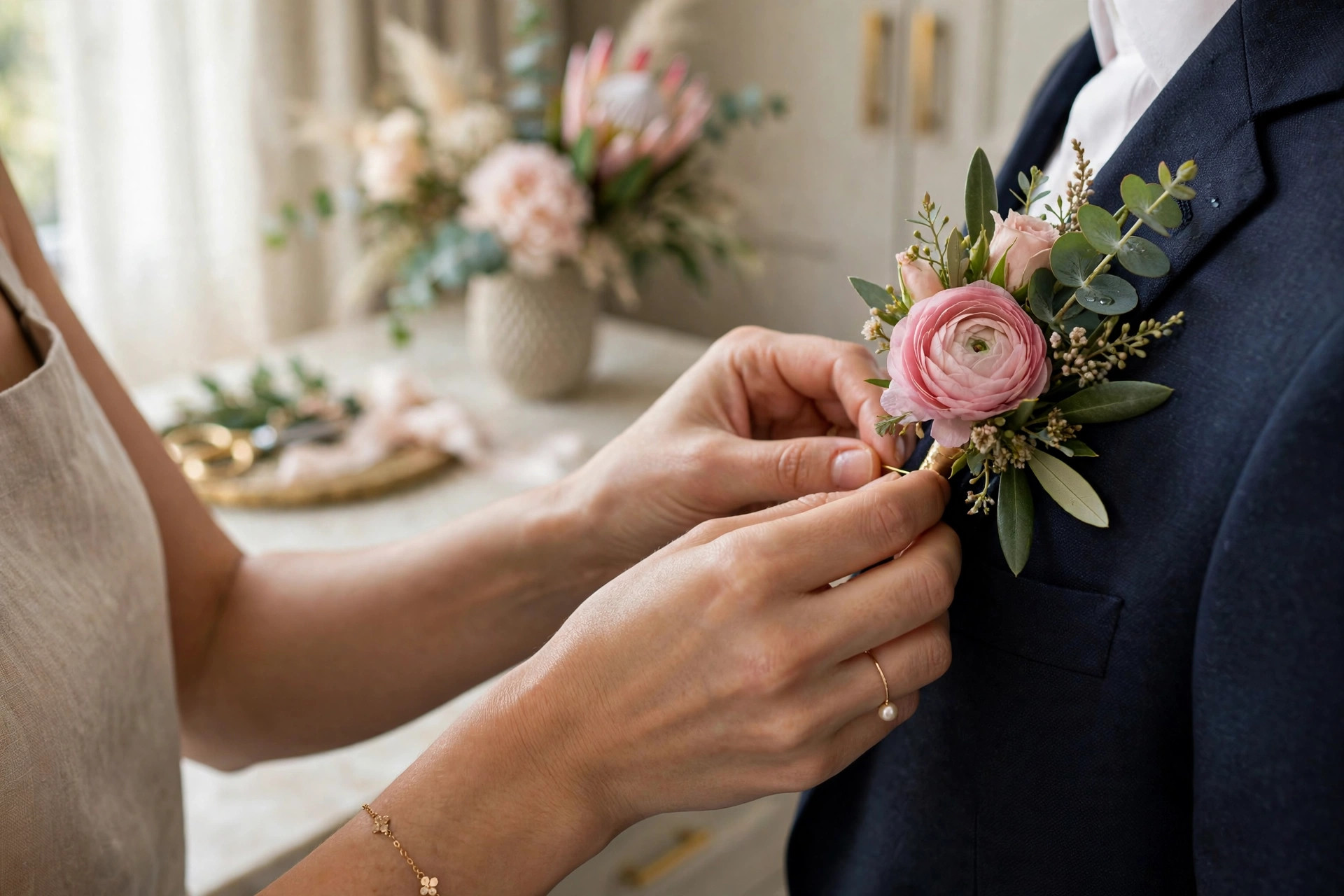
A perfect boutonnière poorly placed is a wasted boutonnière. It goes on the left lapel (over the heart), positioned at the midpoint of the lapel — roughly aligned with the breast pocket’s top edge — angled slightly upward and outward. The flower head should sit just below the lapel’s notch, with greenery trailing naturally downward. Pinning technique matters: the pin goes through the back of the lapel, through the boutonnière’s stem bundle, and back through the lapel — hidden, secure, with the pin head concealed behind the lapel. Two pins in an X formation provide bombproof security for a long day of hugs. Common errors: placing it too high (near the shoulder — it looks like a military decoration), too low (near the pocket — it fights the pocket square), or flat against the chest instead of angled outward (it disappears in photographs). Assign pinning duty to someone calm and competent — the best man, the groom’s father, or the wedding coordinator — and do a trial pinning before the wedding day if the suit is available. Provide the florist’s emergency kit: spare pins, floral tape, and a backup boutonnière. Grooms fidget, guests hug hard, and a five-minute fix beats a day of crookedness. Photograph the placement once pinned — a quick phone photo lets you check the angle objectively.
Who Else Wears One? The Boutonnière Party
The groom’s boutonnière sets the template for a whole hierarchy of lapel flowers. Groomsmen traditionally wear simplified versions of the groom’s — same flower family, slightly smaller or simpler, clearly related but subordinate. The fathers of the bride and groom wear boutonnieres honouring their role — often matching the groomsmen’s or in a distinguished variation (a classic rosebud reads beautifully on a father’s lapel). Grandfathers, if present, are lovely honourees for boutonnieres. Ushers and the ring bearer (a tiny boutonnière on a young ring bearer is irresistible in photographs) complete the wedding party. Readers, officiants, and special honourees may also receive them. The design principle across the group: one visual family, clear hierarchy — the groom’s the most distinctive, groomsmen’s coordinated, fathers’ dignified. Everyone’s boutonnière should be pinned before group photographs, and the coordinator should do a lapel check before the ceremony — a missing or wilted boutonnière in the formal portraits is a preventable regret. Order a few spares beyond the headcount; boutonnieres are small, crushable, and someone always needs a replacement.
Timing, Transport, and Day-Of Survival
Boutonnieres should be among the last florals prepared and the last items delivered — their small size and exposed stems make them the most perishable wedding flowers. Ideally, they arrive with the bridal party flowers on the wedding morning, transported flat in a cool box, and pinned on as late as possible — after dressing, before photographs. In Dubai’s heat, every minute counts: boutonnieres pinned at 2 PM for a 6 PM ceremony will show wear, so time the pinning for shortly before the first photographs. Keep spares in water tubes in a cool place until needed. During the day, the groom should be mindful (but not obsessive): avoid crushing it in hugs by turning slightly, keep it away from direct sun during extended outdoor sessions, and do not fiddle with it — handling damages more boutonnieres than heat does. For the reception, the groom may choose to remove it for dancing (tradition) or wear it through the night (modern practice); either is correct. And the keepsake question: boutonnieres press and dry beautifully — a pressed boutonnière framed alongside a wedding photo is a small, perfect memento of the day’s tiniest, most personal flowers.
Small flower, big impact indeed. The boutonnière is the groom’s signature in blooms — his link to her bouquet, his mark of the occasion, a detail that elevates the suit from well-dressed to wedding-ready. Choose resilient flowers, echo her bouquet, pin it precisely, and protect it from the heat. It is ten centimetres of floristry that will appear in your wedding album for the rest of your lives — worth every moment of thought. For the bouquets walking down the aisle, our bridesmaid bouquets guide for Dubai weddings covers the bridal party’s flowers in full.
Frequently Asked Questions
What is a groom’s boutonniere?
A boutonnière is a single flower or small cluster worn on the left lapel of the groom’s suit jacket. It is the groom’s floral counterpart to the bridal bouquet — traditionally echoing one of her flowers — and appears in nearly every close-up wedding photograph.
Which flowers last best in a boutonniere in Dubai’s heat?
Orchids (dendrobium, cymbidium), spray roses, mini calla lilies, anthuriums, and succulents withstand heat best. Professional wiring, taping, and water tubes extend wear dramatically. Avoid delicate blooms like sweet peas and freesia for extended outdoor wear.
Should the groom’s boutonniere match the bridal bouquet?
It should echo it — traditionally pulling one flower or foliage element from her bouquet, or matching the wedding’s accent colour. The connection should read clearly in photographs without duplicating her design. The groom’s boutonnière should also be recognisably grander than the groomsmen’s versions.
Which side does the boutonniere go on?
The left lapel, over the heart, positioned at the lapel’s midpoint and angled slightly upward and outward. Pin through the back of the lapel so the pin is hidden; two pins in an X formation keep it secure through a long day of hugs and photographs.
Who else wears a boutonniere at the wedding?
Groomsmen (simplified versions of the groom’s), the fathers of the bride and groom, grandfathers, ushers, and the ring bearer traditionally wear boutonnieres. Keep one visual family with a clear hierarchy — the groom’s most distinctive — and order a few spares for replacements.
When should the boutonniere be pinned on?
As late as possible — after dressing, shortly before photographs begin. Boutonnieres are the most perishable wedding flowers, so minimise their exposure to heat and handling. Keep spares in water tubes in a cool place, and assign pinning duty to someone calm and competent.
Valentine’s Day Flower Gifts 2026 in Dubai
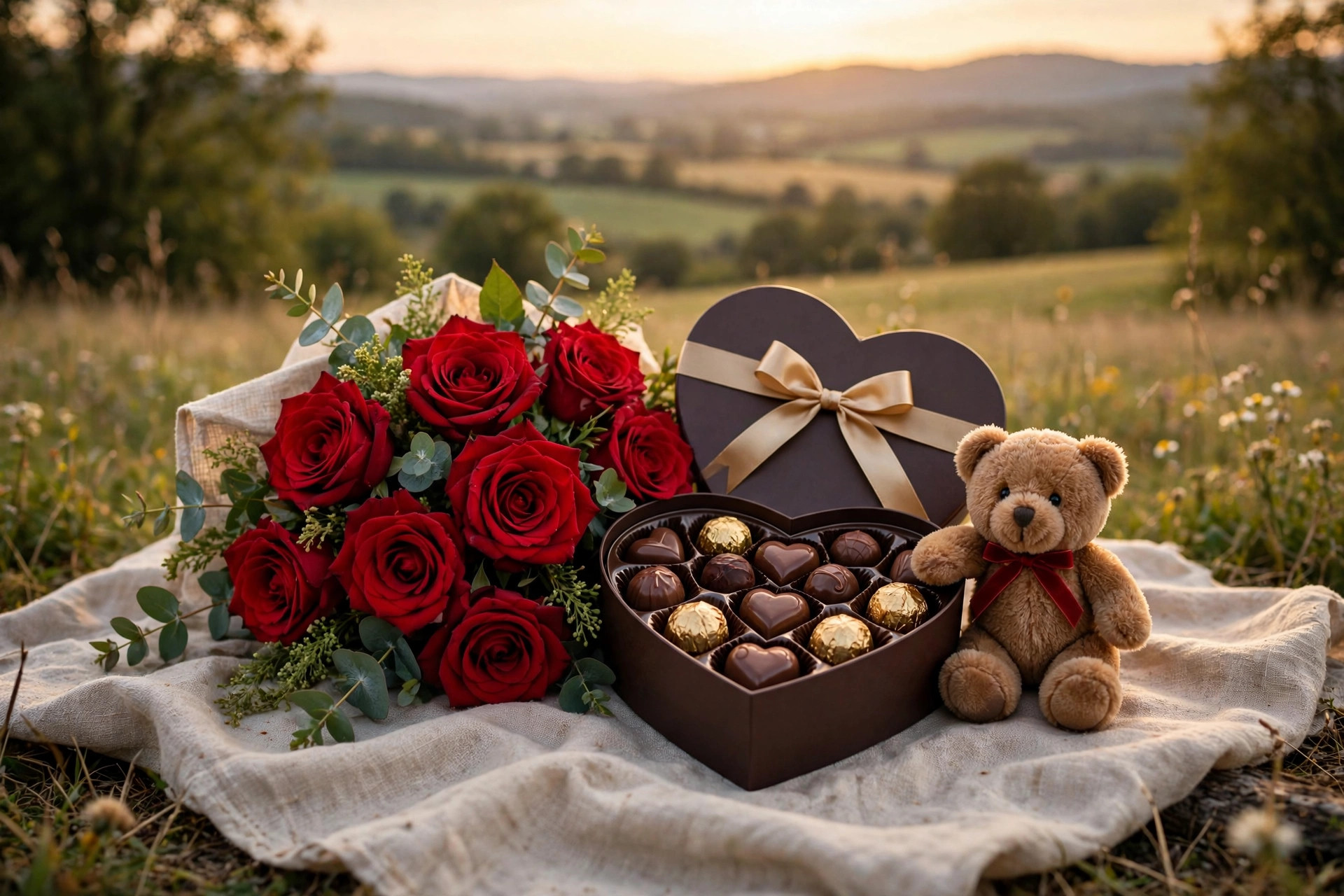
Valentine’s Day in Dubai never really feels quiet. Restaurants book out early, delivery slots disappear faster than expected, and people suddenly realize they should’ve planned
Same Day Flowers Delivery on Valentine’s Day 2026 in Dubai
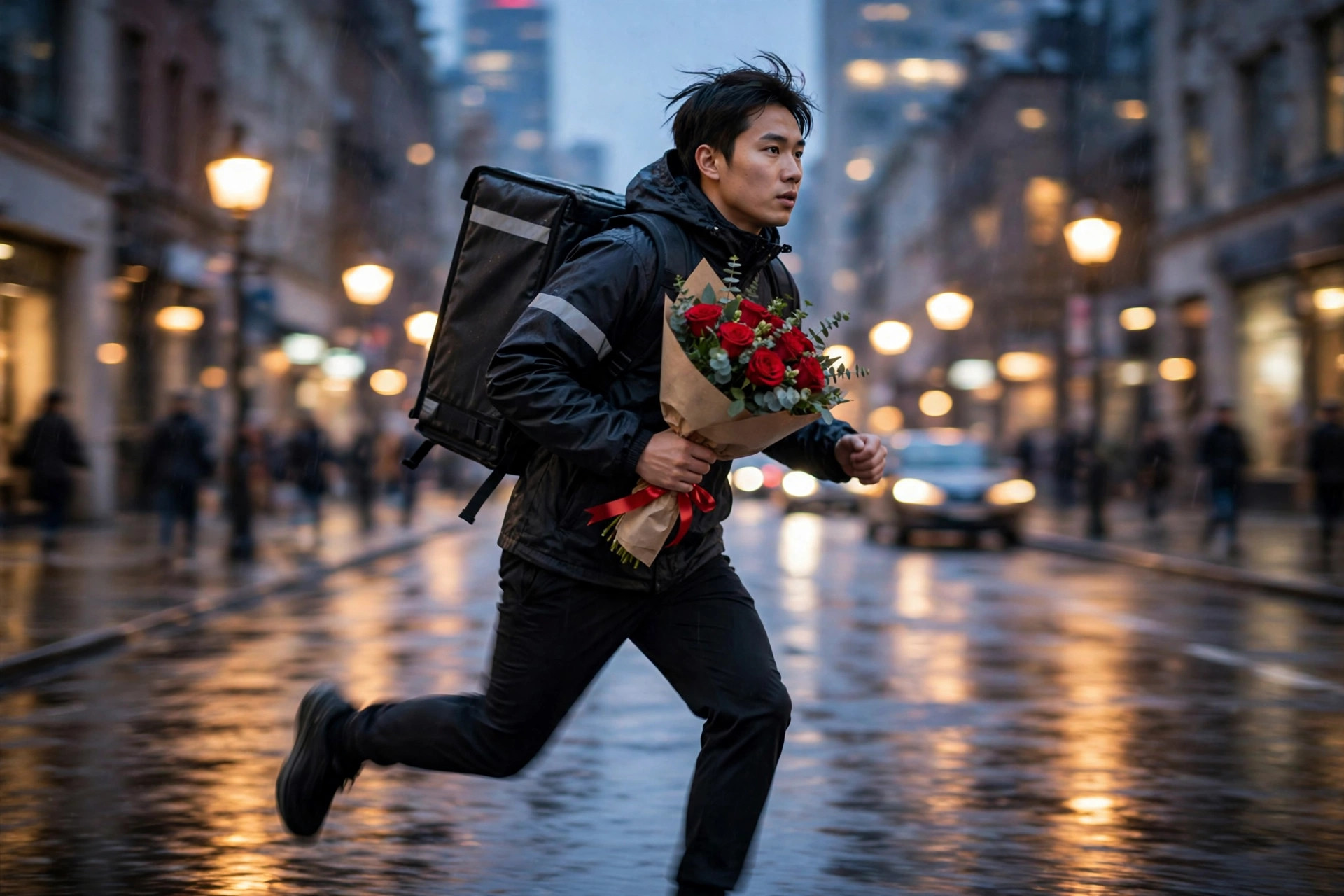
Valentine’s Day has a way of sneaking up on us. One moment you’re thinking you have plenty of time, and the next — it’s already
Valentine’s Day Roses Sale 2026 in Dubai: A Good Time to Plan Something Meaningful
Valentine’s Day has a way of arriving faster than expected. One moment it’s early January, and the next thing you know, restaurants are booked and