
There is a moment, watching a skilled florist work, when a pile of loose stems becomes something unmistakably alive. Hands move quickly — stripping, spiralling, turning — and within minutes a hand-tied bouquet stands complete: balanced, breathing, seemingly effortless. It looks like magic, but it is craft: centuries of technique refined into movements so practised they appear instinctive. The hand-tied bouquet, also called a spiral bouquet, is the foundation of all professional floristry and still the most personal format a florist can make. No foam, no mechanics, no hiding — just stems, skill, and an eye for balance. Whether you are curious about what makes a florist-made bouquet different from a supermarket bunch, dreaming of learning the technique yourself, or simply want to appreciate the work behind your next gift, this guide opens up the craft of the hand-tied bouquet.
What Exactly Is a Hand-Tied Bouquet?
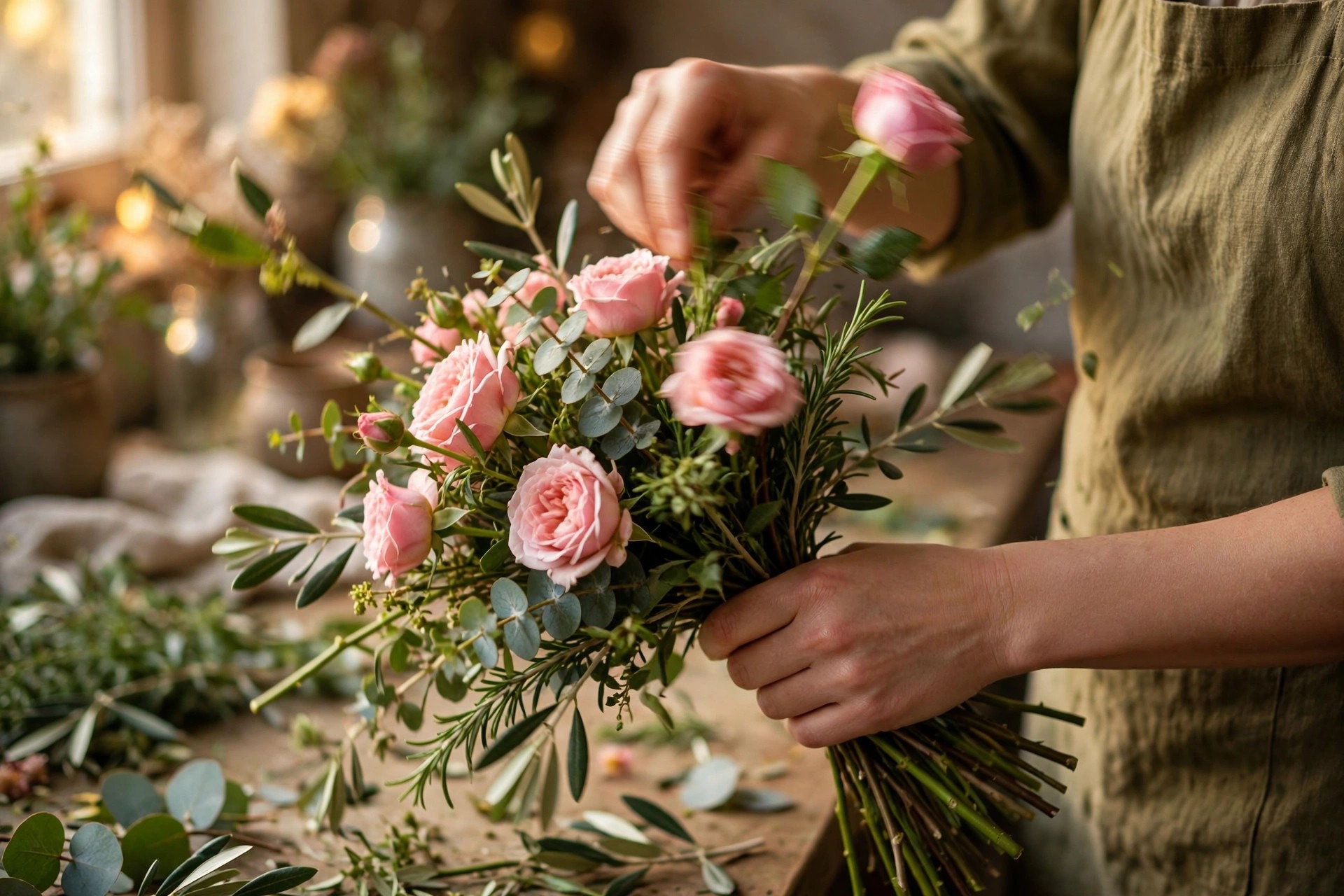
A hand-tied bouquet is built entirely in the florist’s hands, with each stem placed individually and held in a spiral formation. Unlike arrangements made in foam or vases, there is no hidden structure — the stems themselves form the architecture, crossing at a single central point (the “binding point”) so the bouquet stands balanced and each flower gets water when placed in a vase. The defining technique is the spiral: stems are added one by one at an angle, each new stem laid across the previous ones in the same rotational direction, creating the characteristic twist visible when you look down the stems. This spiral is functional, not decorative — it locks the stems together, distributes weight evenly, and allows the bouquet to be set down without collapsing. A true hand-tied bouquet is then bound at the spiral point with twine, raffia, or ribbon, and finished with wrapping. The result should look natural and garden-gathered even when it is formally structured; the best hand-tied work conceals its own engineering completely.
The Florist’s Process, Step by Step
Every hand-tied bouquet begins before a single stem is placed: with conditioning. The florist strips lower leaves (foliage below the waterline rots and shortens vase life), cuts stems at an angle under water or immediately places them in water, and sorts flowers by type and height. This preparation — invisible to the customer — determines half the bouquet’s lifespan. Next comes the design decision: the colour story, the focal flowers, the supporting blooms, the foliage. Experienced florists design in their heads as they select, grouping stems in the hand in rough proportion. Then the spiralling begins. The florist holds a few central stems as the core, and adds stems one at a time, rotating the bouquet slightly with each addition, placing each new stem at an angle across the growing spiral. Focal flowers are positioned deliberately — usually in odd numbers, distributed for balance — while filler flowers and foliage fill the spaces between. Throughout, the florist checks the bouquet from all angles, turning it constantly, adjusting heights so no flower is buried and none towers awkwardly. Finally, the binding point is tied firmly, stems are cut to an even length, and the bouquet is wrapped — paper, cellophane, fabric, or a combination — with the wrapping chosen to complement, never overwhelm, the flowers.
The spiral: why technique matters
The spiral is what separates professional hand-tied work from a bunch of flowers held together. Done correctly, it creates a self-supporting structure where stems grip each other through tension and angle — the bouquet can be laid down, picked up, and placed in a vase without falling apart. The binding point sits at the natural narrow waist of the spiral, usually about two-thirds down the stems. Common amateur mistakes include placing stems parallel (they slide and the bouquet collapses), binding too high or too low (the bouquet either splays or pinches), and failing to rotate (producing a flat, one-sided bunch). Professional florists spiral instinctively after hundreds of repetitions, but the principle is simple: every stem crosses the centre at roughly the same point, angled consistently, like the struts of a teepee. When you receive a genuinely hand-tied bouquet, test it — set it on a table. If it sits balanced and the stems hold their spiral, a skilled hand made it.
Styles of Hand-Tied Bouquets
Within the hand-tied technique, distinct styles have evolved. The classic round posy — a tight dome of flowers, often roses, at uniform height — is the formal, traditional style: think bridal bouquets and Valentine’s Day. The garden-style bouquet is looser and more naturalistic, with varied stem heights, trailing foliage, and an “just gathered” feel; this is the dominant style in contemporary luxury floristry and photographs beautifully. The asymmetric or “wild” bouquet pushes further, with deliberate imbalance, unexpected elements like branches or seed heads, and negative space — a favourite for fashion-forward recipients. The single-variety hand-tie — twenty stems of one flower, spiralled simply — is minimalist and striking, letting the flower itself carry the design. Presentation styles vary too: fully wrapped bouquets (paper concealing the stems) suit gifting and transport, while “aqua-packed” bouquets include a water reservoir at the stem ends for longer journeys — particularly useful in Dubai, where a bouquet may travel across the city in heat. Each style demands the same core spiral skill; what changes is the design eye laid over it.
Why Hand-Tied Beats Mass-Produced
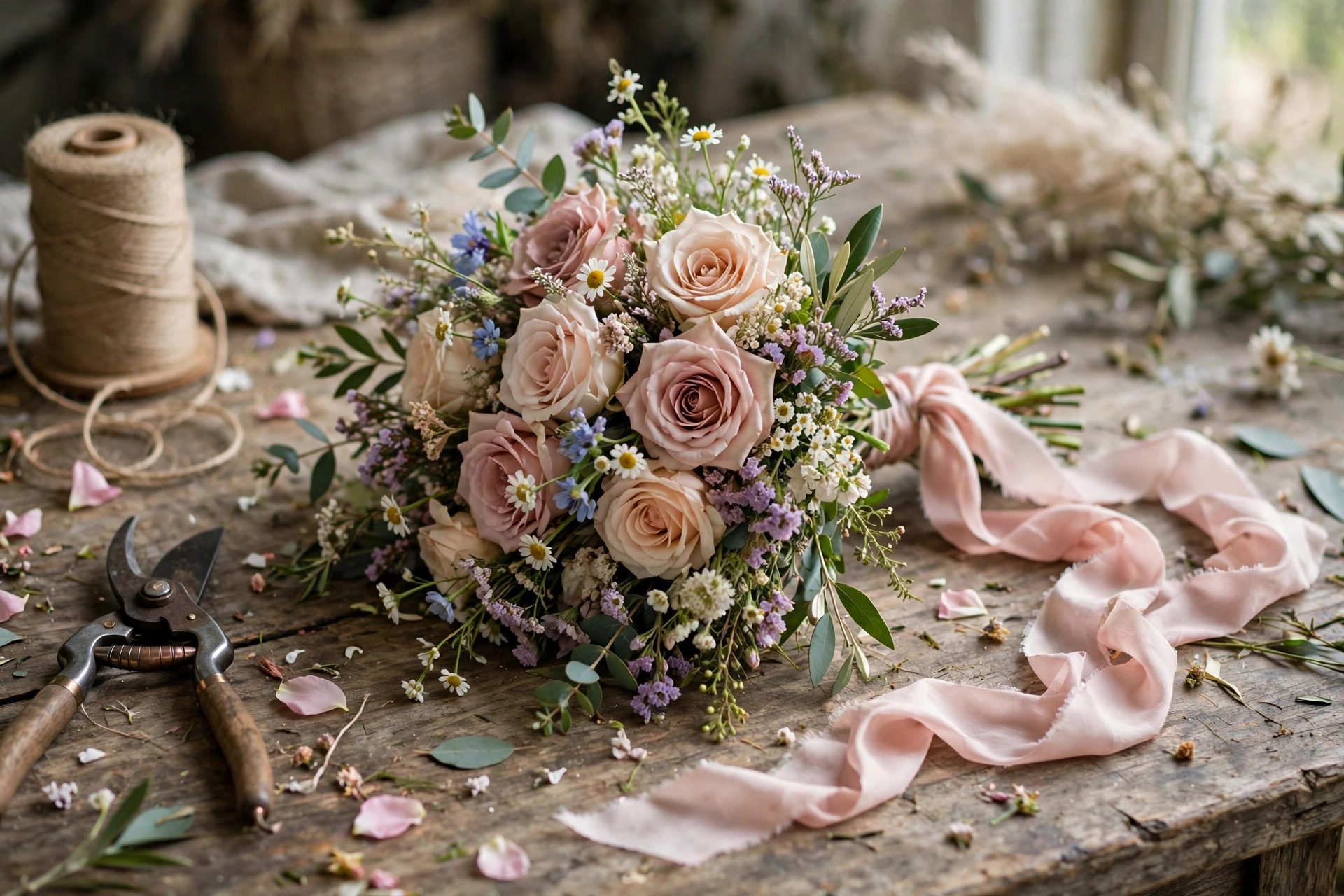
The difference between a florist’s hand-tied bouquet and a pre-made bunch is visible within seconds to a trained eye — and increasingly obvious to everyone else. Mass-produced bunches are assembled to a formula: fixed stem counts, uniform heights, minimal foliage, wrapped for shelf life rather than beauty. A florist’s hand-tied bouquet is composed, not assembled. The florist responds to the actual flowers in front of them — this rose opens wider, that stem is shorter, these two colours sing together — adjusting the design in real time. Foliage is used generously and thoughtfully, giving depth and movement that formula bunches lack. Stem quality differs too: professional florists condition stems properly and work with fresher stock, so a hand-tied bouquet typically lasts noticeably longer. Then there is the intangible: a hand-tied bouquet carries the signature of its maker. Two florists given identical flowers will produce recognisably different bouquets — and that human variation, that evidence of care and judgment, is precisely what makes the gift feel personal. In an age of mass production, the hand-tied bouquet is a small, fragrant argument for craft.
Caring for Your Hand-Tied Bouquet in Dubai
A hand-tied bouquet arrives ready for water — but a few steps will double its life, especially in Dubai’s climate. Unwrap the bouquet promptly on arrival; wrapping traps heat and moisture against the blooms. Fill a clean vase with fresh, room-temperature water and add flower food if provided. Trim about two centimetres off each stem at a sharp angle before placing — this reopens the stem’s water uptake, which may have sealed during transport. Remove any foliage that would sit below the waterline. Position the vase away from direct sunlight, air-conditioning blasts, and fruit bowls (ripening fruit emits ethylene gas that ages flowers prematurely). Change the water every two days, re-trimming stems each time, and remove spent blooms before they affect their neighbours. In Dubai’s heat, never leave a bouquet in a parked car — even ten minutes can cook delicate petals — and if your bouquet arrives by delivery on a hot day, get it into water within the hour. Treated well, a quality hand-tied bouquet of roses or mixed seasonal flowers should give you five to seven days of beauty; hardier varieties like chrysanthemums and carnations can stretch beyond ten.
Trying It Yourself: A Beginner’s Path
Spiralling looks intimidating, but the basics are learnable in an afternoon — mastery takes years, but competence comes quickly. Start with inexpensive, forgiving flowers: alstroemeria, carnations, or spray roses, plus plenty of foliage. Strip and condition everything first. Hold two or three stems as your core in your non-dominant hand, loosely. Add each new stem across the core at an angle, rotating the bunch a quarter-turn each time — the mantra is “place, turn, place, turn.” Do not grip tightly; tension comes from the spiral geometry, not your fist. Build outward symmetrically, checking the top view often: you want even distribution with no gaping holes. When the bouquet feels full, bind it at the natural waist with twine before you let go — this is the moment beginners fumble, so have the twine ready. Then trim, wrap, and admire your slightly lopsided but genuinely hand-tied creation. It will not match a professional’s work, and that is the point — you will never again look at a florist’s bouquet without appreciating the quiet expertise in it. Many Dubai florists and studios offer beginner workshops; a single session with a professional correcting your hand position is worth a dozen video tutorials.
The hand-tied bouquet endures because it is honest: no foam, no wire, no shortcuts — just flowers, hands, and judgment. Every time a florist spirals a bouquet, they are practising a craft refined over generations, and every recipient holds the evidence. Next time you give or receive one, look down the stems for the spiral. It is the signature of the maker, hidden in plain sight. If this glimpse into floristry has you thinking about formats more broadly, our comparison of flower baskets, bouquets, and boxes will help you choose the perfect presentation for any occasion.
Frequently Asked Questions
What is a hand tied bouquet?
A hand-tied bouquet is built entirely in the florist’s hands using a spiral technique: each stem is placed individually at an angle, creating a self-supporting structure with no foam or wire. The stems cross at a central binding point, so the bouquet holds its shape and every flower reaches water when placed in a vase.
How can I tell if a bouquet is genuinely hand-tied?
Look down the stems: a genuine hand-tied bouquet shows a visible spiral twist where stems cross at a single binding point, and it will sit balanced on a table without collapsing. Mass-produced bunches have parallel stems, uniform heights, and minimal foliage by comparison.
How long does a hand-tied bouquet last?
With proper care — fresh water every two days, re-trimmed stems, kept away from heat and direct sun — a quality hand-tied bouquet typically lasts five to seven days in Dubai’s air-conditioned interiors. Hardier flowers like carnations and chrysanthemums can last ten days or more.
Do hand-tied bouquets need a vase immediately?
Yes, ideally within an hour or two of receipt — sooner in Dubai’s heat. Unwrap the bouquet, trim the stems at an angle, and place in fresh water. Some bouquets come aqua-packed with a water reservoir on the stems, which buys extra time during transport.
Can I learn to make a hand-tied bouquet myself?
Absolutely. The basic spiral technique — place a stem at an angle, rotate a quarter-turn, repeat — is learnable in an afternoon with inexpensive flowers like carnations or alstroemeria. True mastery takes years of practice, but beginners can produce charming bouquets quickly, and many Dubai studios offer hands-on workshops.
Why are florist hand-tied bouquets better than supermarket bunches?
A florist composes each bouquet individually, responding to the actual flowers — adjusting for stem length, bloom openness, and colour harmony — with generous foliage and proper conditioning. Supermarket bunches are assembled to a fixed formula for shelf life. The result: florist bouquets look more natural, feel more personal, and typically last longer.
Best Flowers to Gift on New Year’s Eve
As the clock ticks down on the final moments of the year, people around the world gather to celebrate new beginnings. Among the fireworks and
Valentine’s Day Flower Gifts 2026 in Dubai
Valentine’s Day in Dubai never really feels quiet. Restaurants book out early, delivery slots disappear faster than expected, and people suddenly realize they should’ve planned
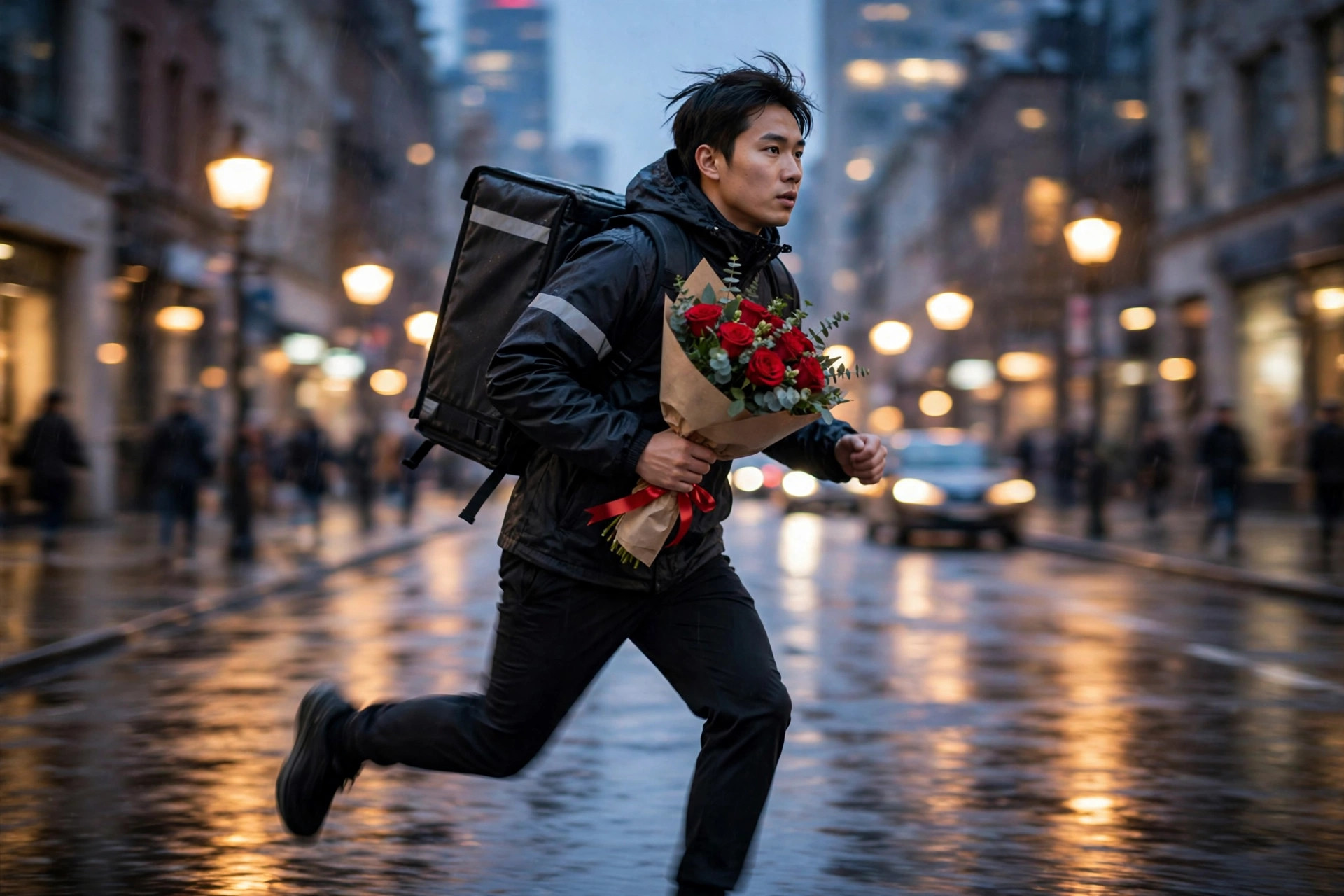
Same Day Flowers Delivery on Valentine’s Day 2026 in Dubai
Valentine’s Day has a way of sneaking up on us. One moment you’re thinking you have plenty of time, and the next — it’s already