
There is a particular heartbreak in watching beautiful roses droop after just three days. You chose them carefully, they looked perfect on delivery, and then, seemingly overnight, the heads bow and the petals dull. Here is the good news: roses that fade fast are almost never doomed by nature. They are usually victims of a few fixable mistakes in handling and care. With the right techniques, those same roses can look stunning for ten days or more. These are ten proven tips to keep your roses alive longer, tested in real Dubai homes.
Tip 1: Start with Truly Fresh Roses
Vase life begins long before the bouquet reaches you. Roses that moved quickly from farm to florist through a proper cold chain have far more life left than roses that sat in warm storage. Buy from a florist with visible turnover and proper refrigeration, and look for roses with firm, upright heads, crisp outer petals (the guard petals, which florists often remove), and green, healthy-looking stems. Avoid roses with drooping heads in the shop; they will not recover at home.
Tip 2: Recut Every Stem at an Angle
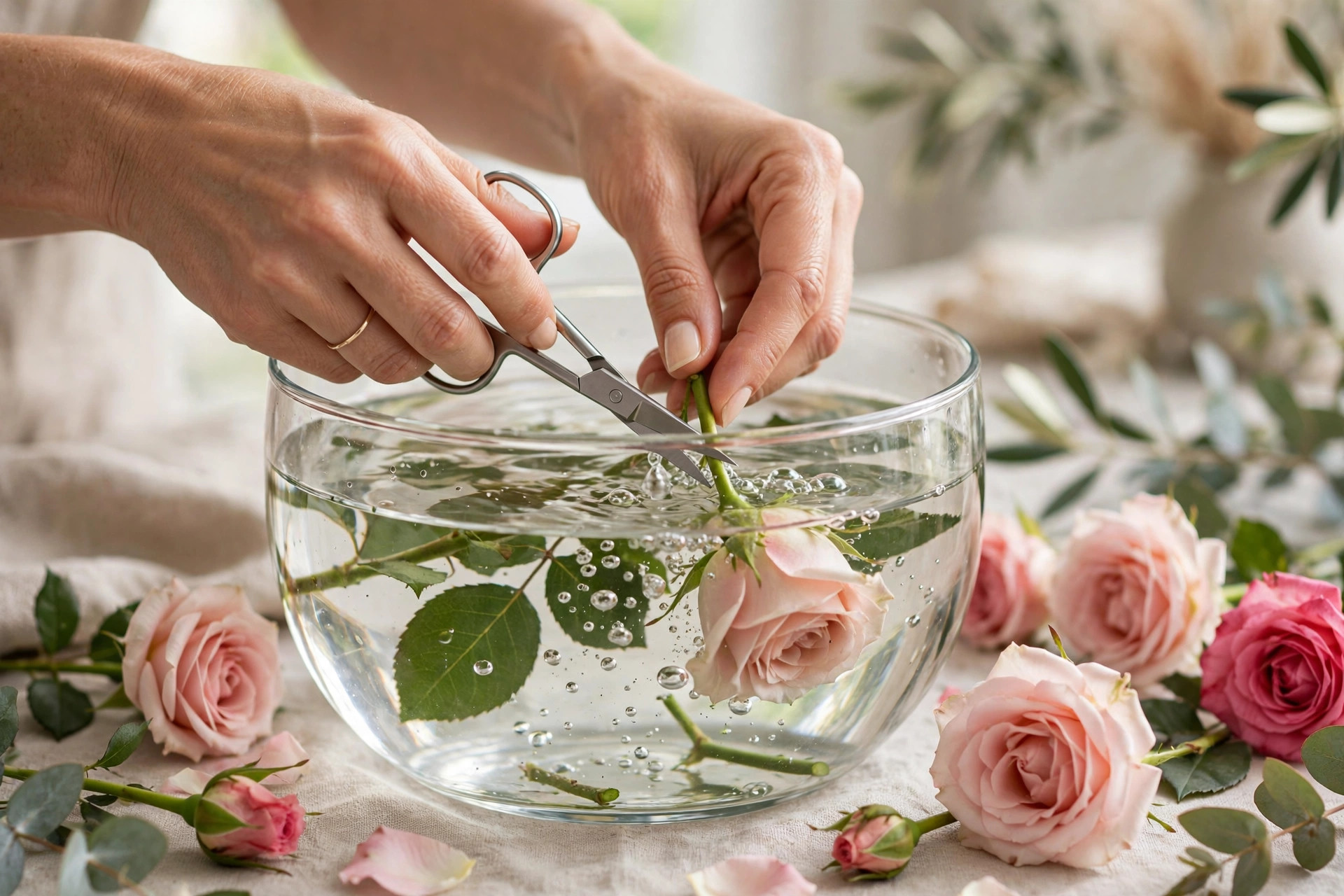
This is the single most important thing you can do. Use sharp scissors or a knife to cut one to two centimetres off each stem at a 45-degree angle, ideally under running water or immediately placing the cut stem into water. The angled cut increases the surface area for water uptake and prevents the stem from sitting flat on the vase bottom, which blocks drinking. Air bubbles in the stem block water flow, so recutting, even roses from a professional bouquet, refreshes their ability to hydrate.
Tip 3: Use the Flower Food Sachet
That little packet taped to the bouquet is not optional decoration. Commercial flower food contains three things roses need: sugar for energy, an acidifier that improves water uptake, and a biocide that suppresses the bacteria which clog stems. Dissolve it fully in the vase water according to the packet directions. If you have no sachet, a teaspoon of sugar and a few drops of lemon juice per litre is a reasonable substitute, but proper flower food works better.
Tip 4: Strip Leaves Below the Waterline
Any leaf sitting in vase water will rot, feeding the bacteria that block stems and cloud water. Strip every leaf that would sit below the waterline before arranging. This is unglamorous work that makes an enormous difference: clean water stays clean far longer, and roses drink freely instead of fighting bacterial blockages. Keep the upper foliage for a lush look, just ensure nothing green touches the water.
Tip 5: Change the Water Every Two Days
Fresh water is to roses what fresh air is to people. Every two days, empty the vase, rinse it, refill with room-temperature water and fresh flower food, and recut each stem by a centimetre. This routine takes five minutes and does more for rose longevity than any additive or trick. In Dubai’s warmth, water degrades faster than in cooler climates, so the two-day rhythm matters even more here.
Tip 6: Keep Roses Cool and Out of the Sun
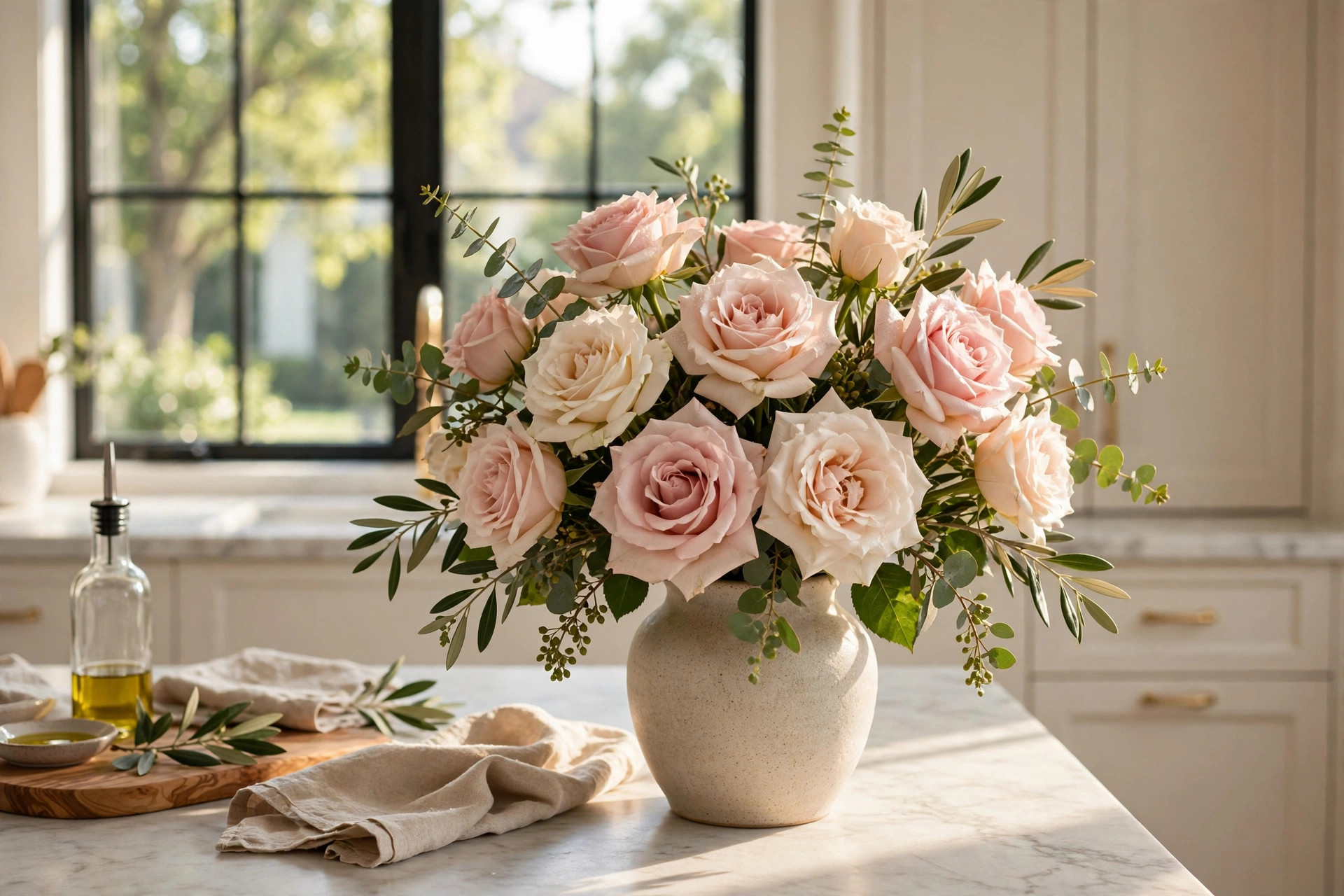
Heat is the enemy of cut roses. Display your bouquet in the coolest spot in the room, away from windows with direct sun, and well away from heat sources. In Dubai homes, that means distance from sun-facing glass, ovens, and any appliance that radiates warmth. At night, moving roses to a cooler room, even a hallway, can add days to their life. Florists store roses at just a few degrees above freezing; every degree cooler you can manage at home helps.
Tip 7: Keep Roses Away from Air-Conditioning Blasts
Dubai’s air-conditioning is essential, but a direct cold blast dehydrates rose petals rapidly, causing edges to brown and curl. Never place a rose vase directly under or in front of an AC vent. If your coolest room is also the most air-conditioned, position the vase in a sheltered corner away from the airflow. Gentle ambient coolness is perfect; a direct jet of cold dry air is destructive.
Tip 8: Separate Roses from Ripening Fruit
Bananas, apples, tomatoes, and avocados release ethylene gas as they ripen, and ethylene is a plant hormone that accelerates ageing in cut flowers. A fruit bowl next to a rose vase can cut vase life nearly in half. This is one of the most common and least suspected causes of fast-fading roses in home kitchens. Move the roses to another room, or move the fruit bowl, and watch the difference.
Tip 9: Revive Drooping Roses with the Warm Water Trick
A rose with a bent neck is not necessarily finished. Recut the stem at a sharp angle, then plunge it into deep, warm (not hot) water for 30 to 60 minutes. The warmth encourages rapid water uptake, and many drooping roses recover dramatically, heads lifting back upright. For a severely wilted rose, you can also try submerging the entire stem and head in cool water for 20 minutes. If the head stays soft and the petals feel papery after revival attempts, that bloom is done; remove it so it does not affect the others.
Tip 10: Remove Spent Blooms Promptly
As individual roses in an arrangement fade, remove them. Decaying petals release ethylene and harbour bacteria that accelerate the decline of neighbouring healthy blooms. Removing a finished rose is not giving up on the bouquet; it is protecting the roses that are still beautiful. Rearrange the remaining stems to fill the gap, and the bouquet often looks fresh again for several more days.
Bringing It All Together: The Five-Minute Rose Routine
You do not need to memorise all ten tips as separate chores. Fold them into one simple routine: when the roses arrive, recut, strip lower leaves, and arrange in fresh water with flower food, placed cool and away from sun, vents, and fruit. Every two days, change the water and recut. Remove fading blooms as they go. That is it. Five minutes every couple of days, and your roses will reward you with ten days or more of beauty instead of three.
Choosing Rose Varieties for Longevity
Not all roses are bred equal when it comes to vase life. Standard hybrid tea roses, the classic long-stemmed florist rose, are bred specifically for longevity and typically outlast garden roses with their many delicate petals. Within hybrid teas, varieties differ: ask your florist which varieties are holding best in current stock, as they handle hundreds of stems and know.
Spray roses, with multiple smaller blooms per stem, often last impressively well and add a charming wildflower feel to arrangements. Their smaller heads dehydrate more slowly, and the succession of buds opening extends the display. For maximum vase life per dirham, a mixed bouquet of standard and spray roses in a hardy colour palette is hard to beat.
The Dubai Rose Calendar: When Roses Are at Their Best
Roses are available year-round in Dubai, but their quality peaks in the cooler months from November to March, when global supply is abundant and transport stress is lowest. Valentine’s Day creates the year’s biggest demand spike; roses bought in early February are often the freshest of the year as supply chains run at maximum efficiency, though prices reflect the demand.
Summer roses need more careful selection: heat stresses every stage of the journey, so buy from florists with proven cold-chain handling and choose sturdy varieties. A reputable florist will be honest about which roses are holding well in current conditions; that honesty is worth more than any specific variety name.
Frequently Asked Questions
How long should roses last in a vase?
With proper care, roses typically last seven to ten days, and sometimes longer. Roses that fade in two to three days have usually suffered from bacterial blockage, dehydration, or heat, all of which are preventable with the tips in this guide.
Why do my rose heads droop?
Drooping rose heads, or “bent neck,” are usually caused by air blockage in the stem preventing water from reaching the bloom. Recut the stem at an angle and place it in deep warm water for 30 to 60 minutes; many roses recover fully.
Should I remove the outer petals of roses?
The outermost “guard petals” often look a little bruised; florists routinely remove them for a cleaner look. Gently peel away any damaged outer petals, but leave healthy ones in place, as they protect the inner bloom.
Does sugar really help roses last longer?
Sugar provides energy to cut flowers and is one of the three active components of commercial flower food, alongside an acidifier and a biocide. Proper flower food works better than sugar alone, so always use the sachet when you have one.
Can roses be revived after wilting?
Often yes. Recut the stem and submerge it in deep warm water for up to an hour. If the head firms up and lifts, the rose has recovered. If petals feel papery and the head stays soft, the bloom is finished and should be removed.
Why do roses die faster in Dubai?
Heat, air-conditioning blasts, and ethylene from nearby fruit are the main culprits in Dubai homes. Keep roses cool but out of direct AC airflow, away from sun and ripening fruit, and change the water every two days to counteract the warmth.

Best Flowers to Gift on New Year’s Eve
As the clock ticks down on the final moments of the year, people around the world gather to celebrate new beginnings. Among the fireworks and

Valentine’s Day Flower Gifts 2026 in Dubai
Valentine’s Day in Dubai never really feels quiet. Restaurants book out early, delivery slots disappear faster than expected, and people suddenly realize they should’ve planned

Same Day Flowers Delivery on Valentine’s Day 2026 in Dubai
Valentine’s Day has a way of sneaking up on us. One moment you’re thinking you have plenty of time, and the next — it’s already