
Dubai is a city of animal lovers — from pampered Persian cats in Marina apartments to golden retrievers racing across Al Qudra’s desert tracks. And where there are pets, there are pet parents who want flowers without the worry. The truth is that several popular blooms are genuinely toxic to cats and dogs, and a beautiful bouquet can become a veterinary emergency if a curious paw gets involved. The good news: plenty of gorgeous flowers are completely pet-safe, so you never have to choose between a beautiful home and a healthy companion.
Why Some Flowers Are Dangerous for Pets
Cats and dogs explore the world with their mouths. A cat batting at a dangling lily petal will almost certainly take a nibble; a bored puppy may chew an entire bouquet, vase water included. Plant toxicity varies enormously: some flowers cause mild stomach upset, while others — notably lilies for cats — can cause fatal kidney failure from even a tiny ingestion of pollen, petal, or leaf.
It is worth understanding that “toxic” covers a spectrum. Oxalate-containing plants like anthuriums and peace lilies irritate the mouth and throat. Saponin-containing plants cause vomiting and diarrhoea. And true lilies (Lilium species) contain compounds that destroy feline kidneys within days. When in doubt, the ASPCA’s plant database is the global reference veterinarians use — and any Dubai vet will tell you the same golden rule: if you have cats, lilies simply do not come through the door.
Flowers That Are Toxic to Cats and Dogs
Memorise this list before your next flower order, especially if you share your home with a cat.
Lilies — the number-one danger for cats
All true lilies — Easter lilies, tiger lilies, Asiatic and Oriental lilies — are extremely toxic to cats. Every part is poisonous: petals, leaves, stems, pollen, even the vase water. A cat that grooms lily pollen from its fur can suffer acute kidney failure. Dogs are less sensitive to lilies but can still develop stomach upset. In a cat household, the only safe lily is no lily.
Tulips and hyacinths
The bulbs concentrate the toxins (tulipalin), but the flowers and leaves can also cause drooling, vomiting, and diarrhoea in both cats and dogs. Tulips are a particular risk at Easter and spring celebrations.
Daffodils and narcissus
Contain lycorine, which triggers severe vomiting, abdominal pain, and in larger doses, heart rhythm problems. The bulbs are the most dangerous part, but the flowers are not safe either.
Chrysanthemums
Contain pyrethrins — the same compounds used in some insecticides. Ingestion causes drooling, vomiting, diarrhoea, and skin irritation in both cats and dogs.
Carnations
Mildly toxic: usually limited to stomach upset and mild skin irritation, but still best avoided in homes with enthusiastic chewers.
Baby’s breath (gypsophila)
A common bouquet filler that causes vomiting and diarrhoea in cats and dogs — and it is exactly the airy filler a cat loves to bat at.
Other names to know
Oleander (sometimes used in large arrangements — highly toxic), foxglove, azaleas and rhododendrons, sago palm (often in tropical arrangements — extremely toxic to dogs), and bird of paradise (mild to moderate toxicity).
Beautiful Pet-Safe Flowers
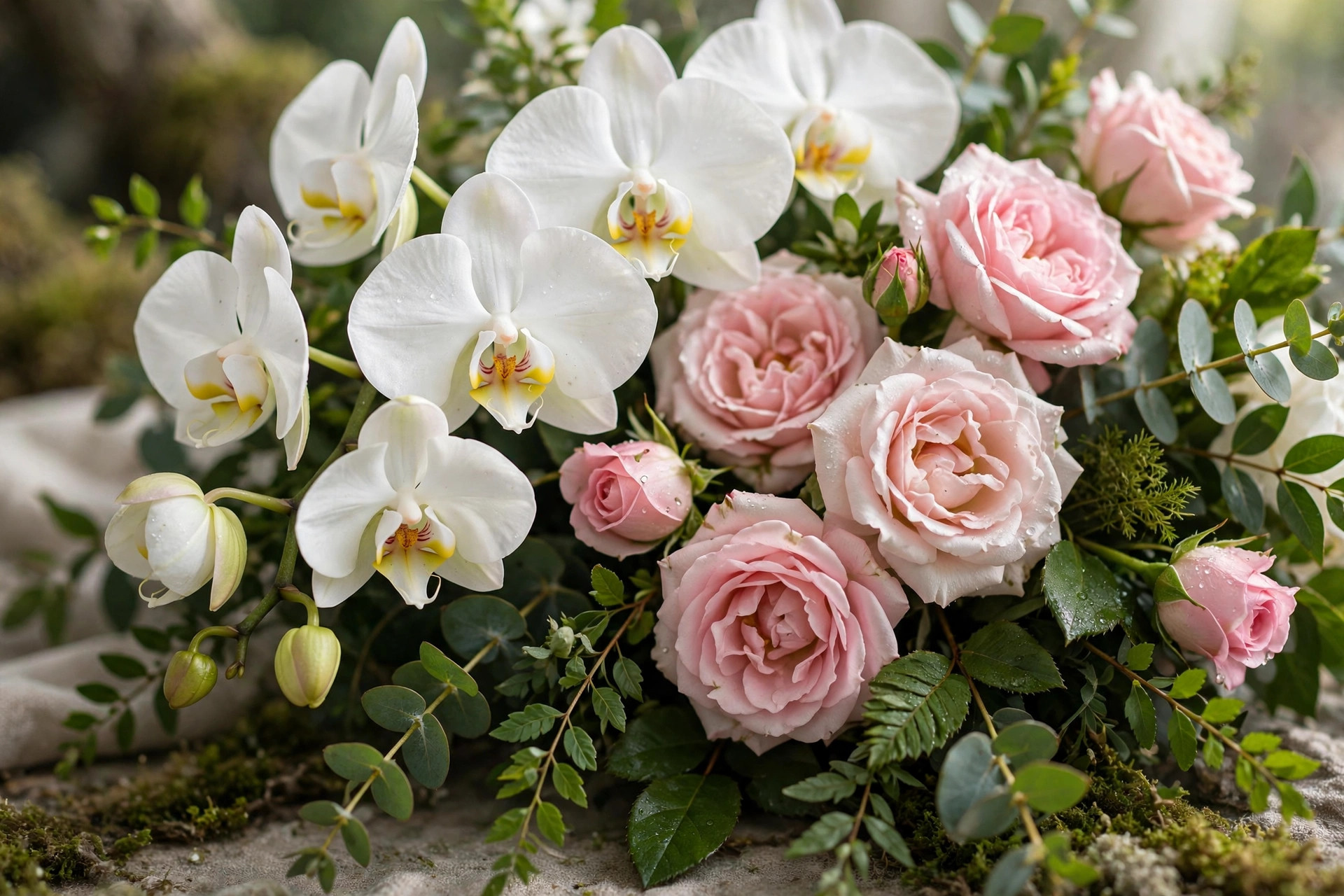
Now the happy news: this list is long, and it includes some of the most beautiful flowers a Dubai florist sells.
Roses
The classic rose is non-toxic to cats and dogs. Thorns can scratch a curious nose, so for homes with very determined pets, ask your florist to strip the thorns — or choose thornless garden varieties. Otherwise, roses are the perfect pet-safe romantic gesture.
Orchids
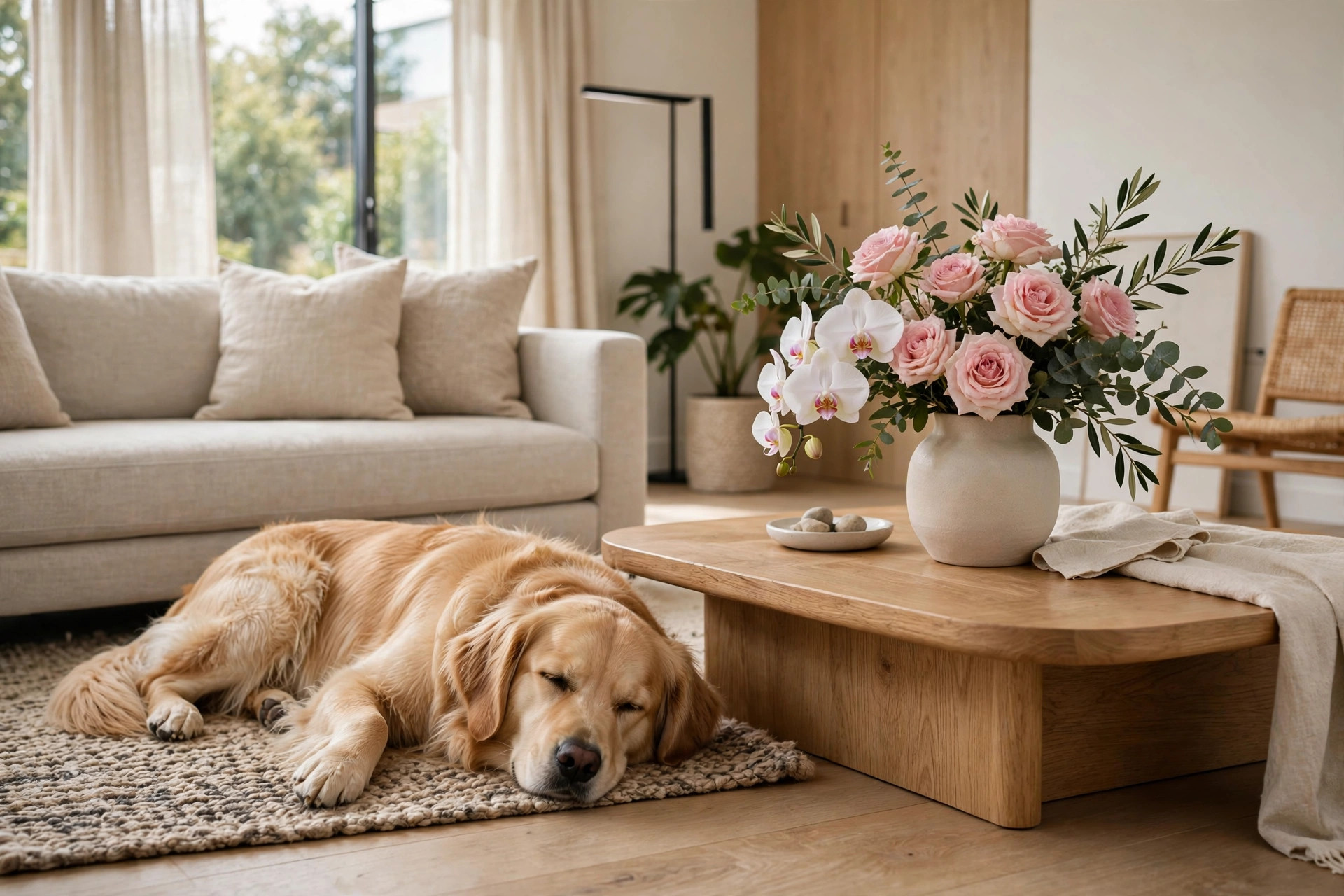
Phalaenopsis and most common orchids are non-toxic to cats and dogs. Given how popular orchids are in Dubai homes, this is wonderful news — your elegant moth orchid can sit safely on the coffee table even with a cat in residence.
Sunflowers
Cheerful, bold, and completely pet-safe. Their only downside is size — a tall sunflower arrangement within batting range of a cat will be toppled for sport, so place them high or in heavy vases.
Gerbera daisies
Bright, joyful, and non-toxic. Gerberas are a fantastic pet-safe alternative to chrysanthemums when you want that daisy-like fullness.
Lisianthus
These ruffled, rose-like blooms are non-toxic and increasingly popular in Dubai’s wedding and event floristry. A sophisticated pet-safe choice.
Statice and waxflower
Both are non-toxic fillers that give arrangements texture and longevity without the risks of baby’s breath.
African violets
A lovely non-toxic flowering houseplant for pet homes — compact, colourful, and safe if a leaf gets sampled.
Polka dot plant and spider plants
For greenery rather than blooms, both are non-toxic and add life to arrangements and planters in pet households.
Practical Tips for Pet Owners Who Love Flowers
- Tell your florist about your pets. A good florist will build the arrangement from pet-safe stems and skip risky fillers like baby’s breath. Mention whether you have cats (the stricter case) or dogs.
- Place arrangements strategically. High shelves, hanging planters, and rooms with closed doors are your friends. Heavy, stable vases resist toppling by enthusiastic tails.
- Change vase water often — and keep pets from drinking it. Vase water can harbour bacteria and, with commercial flower food, mild chemicals. Refresh it every two days and keep the vase out of drinking range.
- Clean up fallen petals promptly. Even pet-safe petals can cause mild stomach upset in quantity, and fallen leaves are irresistible to cats.
- Watch for chewing behaviour. Some cats chew plants out of boredom or nutritional habit. Cat grass (wheatgrass) gives them a safe outlet and is widely available in Dubai pet shops.
- Know your emergency vet. Save the number of a 24-hour veterinary clinic in your phone. If your pet eats an unknown plant, note what it was and call immediately — with lilies and cats, hours matter enormously.
- Consider preserved roses. For the ultimate peace of mind, preserved roses are non-toxic in the practical sense — though the dyes mean you still would not want a pet chewing them, they shed nothing and need no vase water.
Pet-Safe Gifting in Dubai
When sending flowers to someone with pets, the pet-safe question is a thoughtful detail that recipients genuinely appreciate. A new puppy in a JVC villa, a rescue cat settling into a Deira apartment — these are exactly the households where a well-meaning lily bouquet could go wrong. Mention the pets when ordering and ask for a pet-safe build: roses, orchids, gerberas, lisianthus, and statice make a stunning combination with zero worry.
For pet-related occasions themselves — a “gotcha day” anniversary, a new puppy welcome, or sympathy flowers when a beloved pet passes — pet-safe choices carry extra meaning. A soft arrangement of white roses and lisianthus for a grieving pet parent says you understand that their companion was family. And for the new pet parent, a cheerful pot of African violets or a bright gerbera bouquet celebrates the happy chaos to come.
What to Do If Your Pet Eats a Toxic Flower
Stay calm and act quickly. Remove any remaining plant material from your pet’s mouth. Note exactly what was eaten and how much — a photo of the bouquet helps the vet enormously. Do not induce vomiting unless your veterinarian instructs you to. Call your vet or a 24-hour emergency clinic immediately; for cats that have contacted lilies, treatment is most effective within the first few hours. Keep the packaging or card from the bouquet so the vet can identify every stem. In Dubai, several veterinary hospitals offer round-the-clock emergency care, and acting fast is the single biggest factor in a good outcome.
Pet-Safe Flowering Houseplants for Dubai Homes
Beyond cut flowers, many Dubai pet owners want living greenery that won’t endanger a curious cat or a teething puppy. The good news is that several beautiful flowering houseplants are fully pet-safe. African violets bloom almost continuously in bright indoor light and are completely non-toxic. Phalaenopsis orchids — already Dubai’s favourite houseplant — are safe for both cats and dogs and rebloom for years. Bromeliads, with their dramatic coloured bracts, are non-toxic and thrive in the Emirates’ warmth. Spider plants and Boston ferns add lush greenery with zero risk, and both tolerate the occasional feline nibble. Herbs like basil and thyme on a sunny kitchen windowsill are safe for pets and useful for cooking — the rare plant that serves the whole household. Avoid the popular-but-risky choices: peace lilies, ZZ plants, pothos, and sago palms are all toxic to varying degrees and have no place in a pet home.
Frequently Asked Questions
Which flowers are safe for cats?
Roses, orchids (phalaenopsis), sunflowers, gerbera daisies, lisianthus, statice, waxflower, and African violets are all non-toxic to cats. Avoid all true lilies — they can cause fatal kidney failure in cats.
Are lilies dangerous for dogs too?
Lilies are far less dangerous to dogs than to cats, but they can still cause stomach upset. The extreme, life-threatening risk is specific to cats — for feline households, lilies should never be brought indoors.
Are roses safe for pets?
Yes, roses are non-toxic to both cats and dogs. The only caution is the thorns, which can scratch curious noses and paws — ask your florist to remove them for homes with enthusiastic pets.
Is baby’s breath safe for cats and dogs?
No — baby’s breath (gypsophila) causes vomiting and diarrhoea in cats and dogs. Ask your florist to substitute a pet-safe filler such as statice or waxflower instead.
What should I do if my cat eats part of a lily?
Act immediately: remove plant material from the mouth, note what was eaten, and call a veterinarian or 24-hour emergency clinic right away. With lily exposure in cats, treatment within the first few hours dramatically improves the outcome.
Can I have flowers if my pet chews everything?
Yes — choose non-toxic varieties like roses, orchids, or gerberas, place arrangements out of reach in heavy vases, clean up fallen petals promptly, and provide cat grass as a safe chewing alternative. Preserved roses are another low-risk option.

Valentine’s Day Flower Gifts 2026 in Dubai
Valentine’s Day in Dubai never really feels quiet. Restaurants book out early, delivery slots disappear faster than expected, and people suddenly realize they should’ve planned

Same Day Flowers Delivery on Valentine’s Day 2026 in Dubai
Valentine’s Day has a way of sneaking up on us. One moment you’re thinking you have plenty of time, and the next — it’s already
Valentine’s Day Roses Sale 2026 in Dubai: A Good Time to Plan Something Meaningful
Valentine’s Day has a way of arriving faster than expected. One moment it’s early January, and the next thing you know, restaurants are booked and