
Ramadan is the most cherished month in the UAE — a time of reflection, generosity, and togetherness. As the crescent moon rises over Dubai’s skyline, homes fill with the warmth of iftar gatherings, and the act of giving takes on a deeper meaning. Flowers, with their quiet beauty and universal language, are among the most thoughtful gifts you can offer during the holy month. But Ramadan gifting carries its own etiquette, and choosing the right blooms — in the right colours, at the right moment — turns a lovely gesture into a truly meaningful one.
Why Flowers Are a Perfect Ramadan Gift
In a culture where hospitality is sacred, arriving at an iftar with flowers in hand is a gesture that never goes unnoticed. Unlike many gifts, flowers suit every recipient — the host who has spent the afternoon preparing a feast, a colleague observing the fast, a neighbour you barely know, or family gathered from across the Emirates. They are elegant without being extravagant, personal without being presumptuous.
Ramadan is also a month when many people consciously simplify. A gift of fresh flowers fits that spirit beautifully: it is natural, temporary, and meant to be enjoyed in the moment rather than accumulated. For hosts, flowers solve a practical problem too — a home that will welcome guests night after night for thirty days always benefits from fresh, beautiful arrangements.
Ramadan Flower Etiquette in the UAE
A little cultural awareness goes a long way. These guidelines will help your gift land exactly as intended.
Choose modest, tasteful arrangements
Ramadan is a month of restraint, and your flowers should reflect that. Elegant, understated arrangements in soft whites, creams, blush pinks, and gentle pastels are ideal. Avoid anything overly flashy or ostentatious — the goal is warmth and sincerity, not spectacle.
Time your delivery thoughtfully
If you are sending flowers to someone who is fasting, schedule the delivery for the late afternoon so the blooms arrive fresh before iftar, or for the morning when the household is awake and preparing. Avoid delivery during the deep afternoon rest hours. Many Dubai florists offer same-day delivery, which makes it easy to time your gift for the day of an iftar invitation.
Pair flowers with dates or Arabic sweets
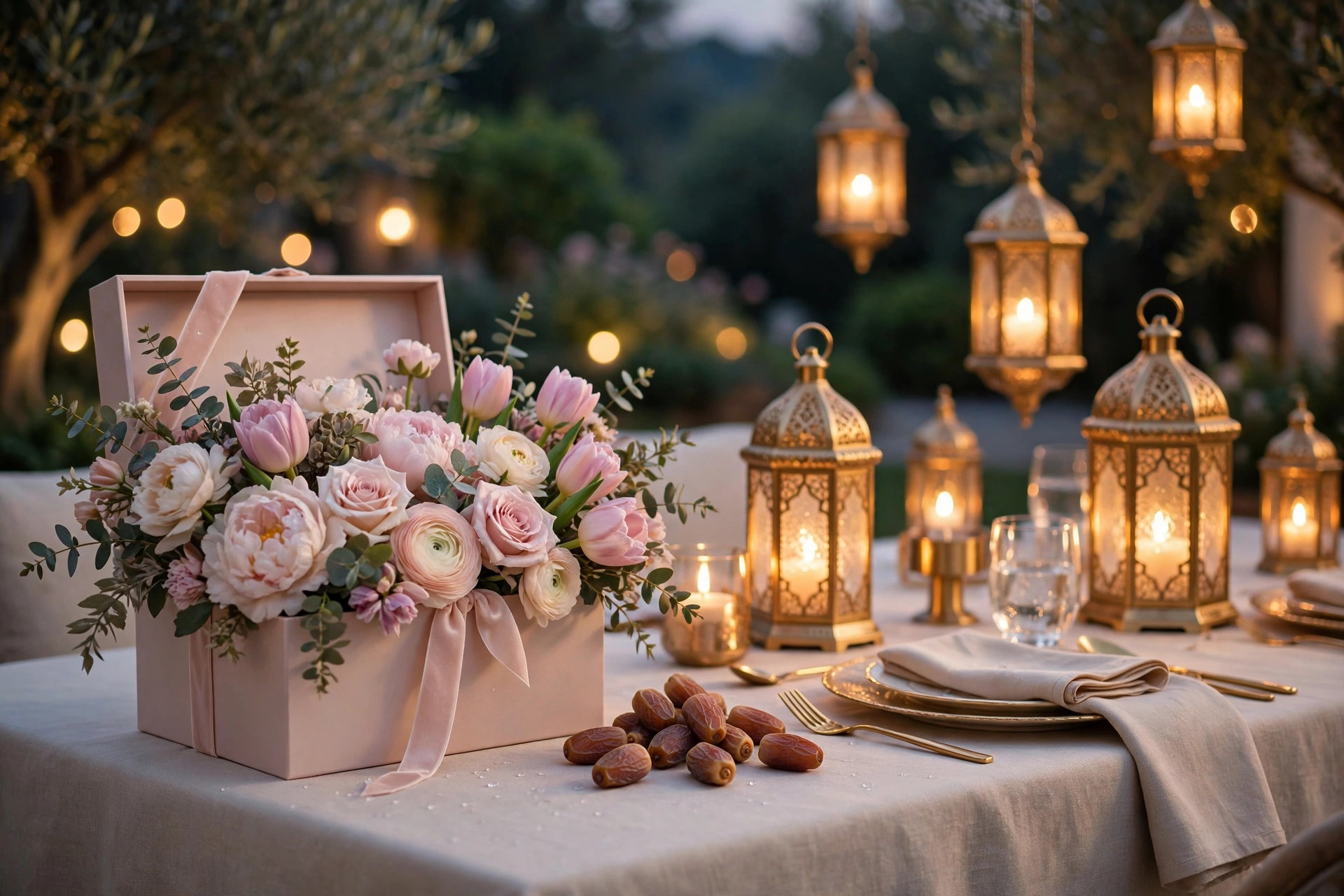
The classic Ramadan gift pairing is flowers with premium dates — Medjool, Sukkari, or stuffed dates in an elegant box. Flowers plus a box of maamoul or baklava is equally beloved. The combination honours tradition while adding the fresh, living beauty that only flowers bring.
Include a heartfelt note
A few sincere words elevate any Ramadan gift. “Ramadan Kareem” or “Wishing you and your family a blessed Ramadan” is always appropriate. For Eid al-Fitr, which follows the month, “Eid Mubarak” with wishes of joy and prosperity is the traditional greeting.
The Best Flowers for Ramadan
Certain blooms carry associations that make them especially fitting for the holy month.
White roses and lilies
White flowers symbolise purity, peace, and new beginnings — sentiments at the very heart of Ramadan. White roses are universally appropriate; white lilies are stunning but best for recipients without pollen sensitivities or strong fragrance preferences.
Orchids
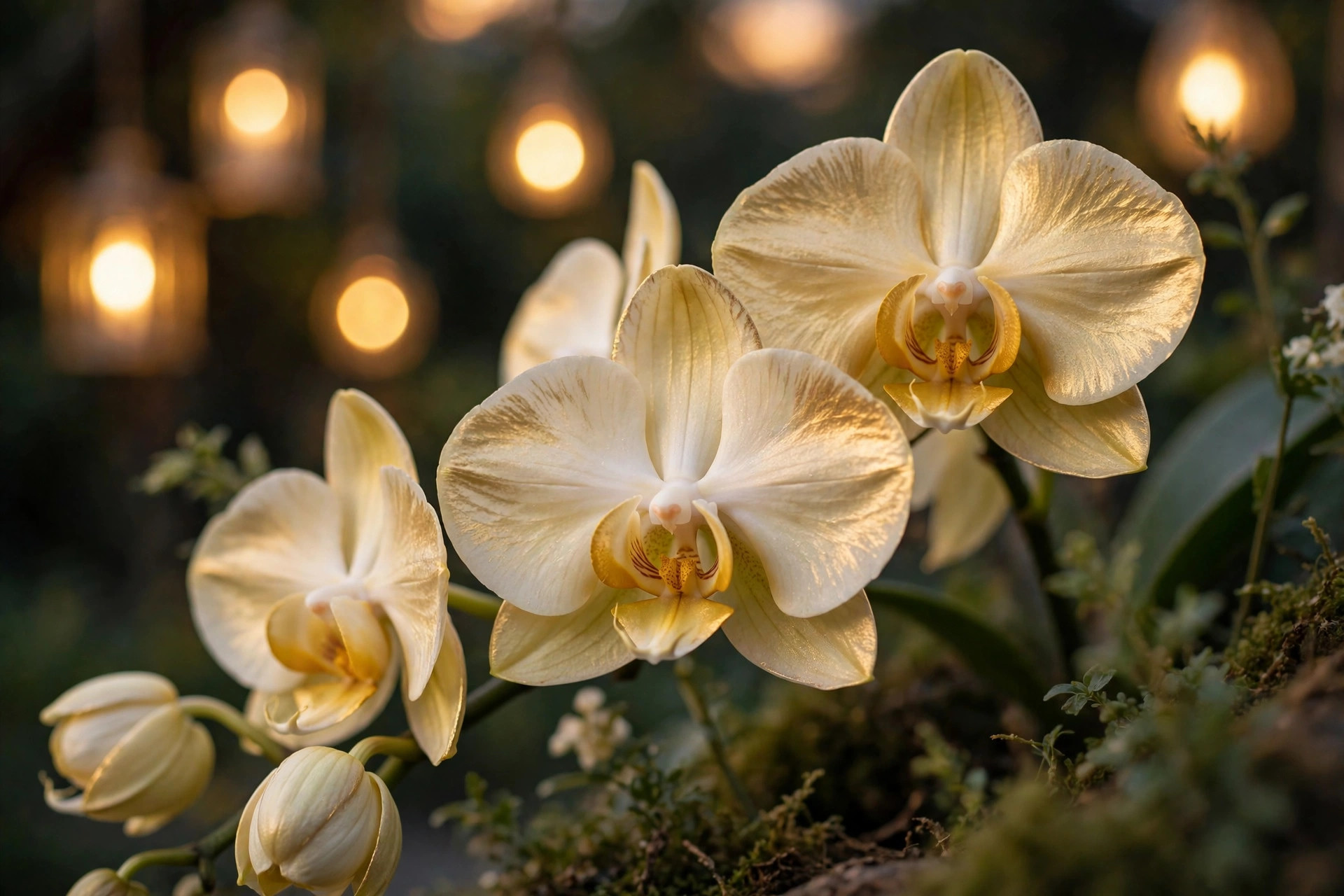
Orchids embody refined elegance and last for weeks, making them a wonderful gift for a host who will be entertaining throughout the month. A white phalaenopsis orchid in a ceramic pot is one of the most sophisticated Ramadan gifts you can give in Dubai.
Jasmine
Jasmine holds a special place in Arab culture — its sweet evening fragrance is the scent of Ramadan nights for many families. A jasmine plant or an arrangement featuring jasmine is a deeply evocative gift, though best given as a plant for a home with outdoor space or a bright balcony.
Pastel mixed bouquets
Soft arrangements of roses, carnations, and lisianthus in blush, cream, and lavender tones feel celebratory without being loud. They suit the reflective mood of the month while still bringing colour to the iftar table.
Preserved roses
For a gift that lasts well beyond the thirty days, preserved roses in white, gold, or blush are an inspired choice — they honour the occasion and remain beautiful through Eid and beyond.
Flowers for Iftar Gatherings and Corporate Ramadan
Ramadan transforms Dubai’s social calendar. Nightly iftars — at home, in restaurants, in grand hotel tents — become the month’s defining ritual, and flowers play a starring role in the décor.
Hosting an iftar
Low, lush centrepieces in whites and golds let conversation flow across the table while adding quiet luxury. Consider a runner of small bud vases with single roses or orchid stems rather than one tall arrangement — it feels abundant and every guest gets beauty up close. Scent matters at a dinner table: choose lightly fragrant or unscented blooms so the flowers never compete with the food.
Corporate Ramadan gifting
Businesses across the UAE mark Ramadan with gifts to clients, partners, and staff. Flowers are a safe, universally appreciated corporate gift — elegant, non-denominational, and suitable for every recipient regardless of faith. Many companies pair a modest orchid plant or a boxed arrangement with dates and a branded Ramadan card. Ordering early in the month is wise, as Dubai’s florists get busy in the final ten days.
Mosque and community spaces
Some families and organisations decorate majlis areas and community iftar venues with flowers. Simple, dignified arrangements in white and green — echoing Islamic aesthetic traditions — are the respectful choice for shared spiritual spaces.
Eid al-Fitr: Flowers for the Celebration
When Ramadan ends, Eid al-Fitr brings three days of feasting, new clothes, and joyful visiting — and the floral mood shifts with it. Eid flowers can be bolder and more celebratory: vibrant mixed bouquets, luxurious rose boxes, and grand arrangements in festive colours. It is the UAE’s biggest flower-giving moment after Valentine’s Day, and Dubai’s florists prepare accordingly.
If you are visiting family on Eid morning, flowers paired with an envelope of Eidiya for the children or a box of premium chocolates make the classic entrance. For hosts, a large, cheerful arrangement says “thank you for the feast” better than words. And because Eid follows a month of dawn-to-dusk fasting, many people particularly appreciate gifts that feel indulgent and joyful.
Ordering Ramadan Flowers in Dubai: Practical Tips
- Order ahead for the last ten days. Demand peaks as Eid approaches; the holiest nights of Ramadan (the odd nights of the last ten days) and the Eid holidays are the busiest period of the year for UAE florists after Valentine’s.
- Confirm the recipient’s schedule. During Ramadan, daily rhythms shift — late nights, late mornings. A quick message to confirm a good delivery window avoids a missed delivery.
- Choose long-lasting varieties. Orchids, carnations, chrysanthemums, and preserved roses hold up best through weeks of entertaining.
- Keep the card message simple and sincere. “Ramadan Kareem — wishing you peace and blessings” is perfect. Avoid humour or overly casual notes for recipients you don’t know well.
- Respect fasting hours for food pairings. If you are pairing flowers with dates or sweets for someone who is fasting, a daytime delivery is fine — the gift will simply be enjoyed after sunset.
Ramadan Flower Traditions Around the World
While the UAE has its own gifting customs, Ramadan flowers carry meaning across the Muslim world — and Dubai’s multicultural community blends them all. In Turkey, Ramadan brings the tradition of adorning homes with fresh flowers for iftar guests, much like the Emirates. In South Asia, marigold and jasmine garlands decorate doorways during the holy month, a custom many Indian and Pakistani families in Dubai continue on their balconies and entrance doors. In the Levant, orange blossom water scents the sweets served after iftar, and orange-blossom sprigs sometimes appear in table arrangements. Understanding these threads helps when you are gifting across cultures: a bouquet that nods to the recipient’s heritage — jasmine for a South Asian family, white roses for an Arab household, orange blossom accents for a Levantine one — shows a thoughtfulness that generic gifting never achieves.
Frequently Asked Questions
Are flowers an appropriate gift during Ramadan?
Absolutely. Flowers are one of the most appropriate Ramadan gifts — elegant, modest, and suitable for every recipient. They are especially appreciated by iftar hosts and as corporate gifts during the holy month.
What colours of flowers are best for Ramadan?
Soft, modest tones are ideal: white, cream, blush pink, and gentle pastels. White symbolises purity and peace, making it the most fitting choice. Save bold, vibrant colours for the Eid celebration that follows.
When should I send flowers during Ramadan?
Late afternoon delivery — arriving fresh before iftar — is ideal for fasting recipients. Morning deliveries also work well. Avoid the mid-afternoon rest hours, and confirm the recipient’s shifted Ramadan schedule when you can.
What should I write on a Ramadan flower card?
“Ramadan Kareem” with wishes for peace and blessings is the classic message. Keep it sincere and simple. For Eid al-Fitr flowers, write “Eid Mubarak” with wishes of joy and prosperity.
Are flowers suitable as corporate Ramadan gifts in the UAE?
Yes — flowers are an excellent corporate Ramadan gift because they are elegant, non-denominational, and appropriate for every client, partner, or employee regardless of faith. Many businesses pair them with premium dates and a Ramadan card.
What flowers are best for Eid al-Fitr?
Eid calls for celebration, so bolder choices work beautifully: vibrant mixed bouquets, luxurious rose boxes, orchids, and grand arrangements in festive colours. Pair them with chocolates or an Eidiya envelope for the classic Eid visit.

Valentine’s Day Flower Gifts 2026 in Dubai
Valentine’s Day in Dubai never really feels quiet. Restaurants book out early, delivery slots disappear faster than expected, and people suddenly realize they should’ve planned

Same Day Flowers Delivery on Valentine’s Day 2026 in Dubai
Valentine’s Day has a way of sneaking up on us. One moment you’re thinking you have plenty of time, and the next — it’s already
Valentine’s Day Roses Sale 2026 in Dubai: A Good Time to Plan Something Meaningful
Valentine’s Day has a way of arriving faster than expected. One moment it’s early January, and the next thing you know, restaurants are booked and